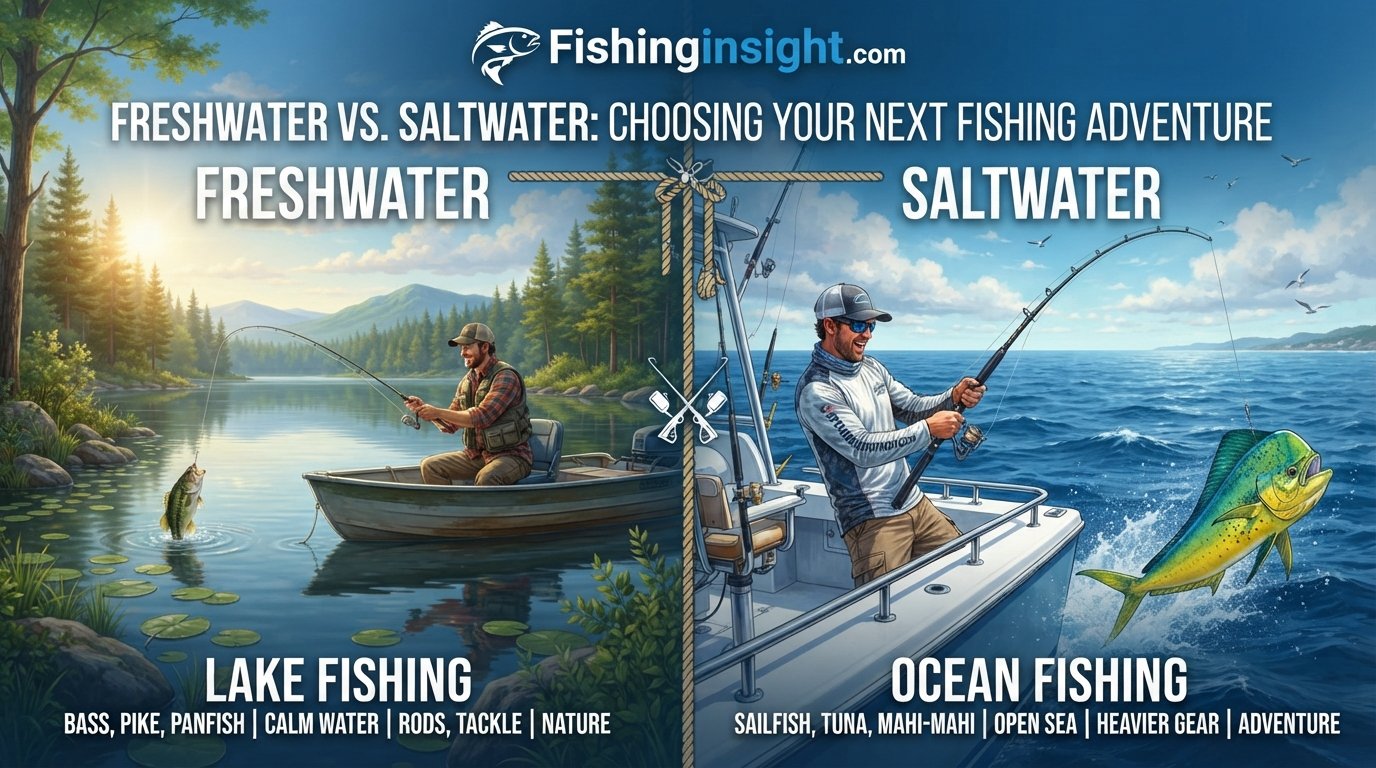
Freshwater vs Saltwater Fishing: The Complete Comparison Guide
Gear, techniques, target species, cost, and skill differences — everything you need to decide where to cast your next line.
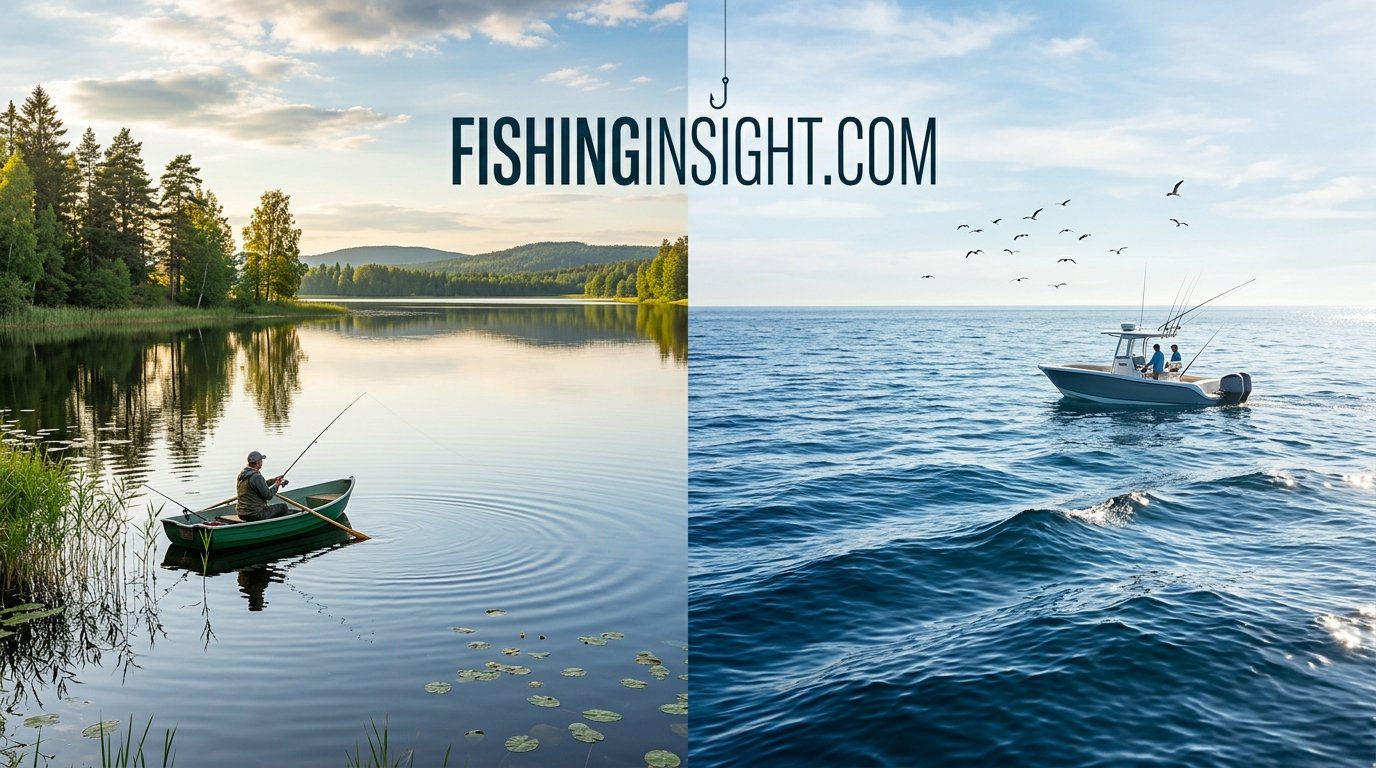
Ask ten anglers whether freshwater or saltwater fishing is “better” and you’ll get ten different answers — usually delivered with a surprising amount of passion. The truth is that both worlds reward the same core skills: reading water, matching presentation to conditions, and staying patient. But under that shared foundation, freshwater and saltwater fishing diverge in almost every practical way that matters — the gear you buy, the money you spend, the species you chase, and even the way your body has to adjust to the environment. This guide breaks down every meaningful difference so you can decide where to point your boat, kayak, or waders next, or simply understand why your saltwater-obsessed buddy and your bass-fishing uncle never seem to agree on anything.
If you’re just getting your electronics dialed in before you commit to a side, it’s worth first understanding how to read a fish finder and how to use a fish finder properly — sonar behaves differently depending on water type, which we’ll cover in detail later in this guide. This comparison runs long on purpose: rather than giving you a shallow overview, we wanted to build the single most complete resource on the differences between freshwater and saltwater fishing anywhere online, covering everything from entry-level cost breakdowns to the exact knots serious anglers tie in the surf.
1. What Actually Separates Freshwater From Saltwater Fishing
At the most basic level, the distinction is exactly what it sounds like: freshwater fishing happens in lakes, rivers, ponds, and streams with little to no salt content, while saltwater fishing takes place in oceans, bays, estuaries, and tidal flats where salinity, tides, and currents are constant variables. But that simple definition hides a much bigger set of downstream effects.
Salinity changes water density, which changes how fish suspend, how sound and sonar travel, and how quickly metal corrodes. Tides introduce a moving, cyclical component to saltwater fishing that freshwater anglers rarely have to think about — a spot that’s productive at low tide might be completely dead two hours later. Freshwater systems, by contrast, tend to be more stable day to day, but far more sensitive to seasonal turnover, thermoclines, and localized weather like recent rain runoff.
| Factor | Freshwater | Saltwater |
|---|---|---|
| Water movement | Current-driven (rivers) or still (lakes) | Tide and current driven, changes hourly |
| Salinity effect on gear | Minimal corrosion risk | High corrosion risk, requires rinsing |
| Typical water clarity | Variable, often stained or clear | Often clearer in open water, murkier in bays |
| Access points | Shorelines, docks, small boats | Piers, jetties, larger boats, surf |
| Fish behavior driver | Temperature, structure, forage | Tide stage, moon phase, bait migration |

Keep your tackle organized no matter which water you fish. A durable, corrosion-resistant tackle box saves you from lost gear and rusted hooks after a saltwater trip.
Check Price on Amazon2. Target Species: Who Lives Where
The species you’re after is usually the single biggest factor in deciding which type of fishing appeals to you. Freshwater fishing in North America is dominated by largemouth and smallmouth bass, walleye, crappie, catfish, trout, and pike — species that are widely stocked, heavily studied, and forgiving for beginners. Saltwater fishing opens the door to redfish, snook, tarpon, striped bass, flounder, mahi-mahi, and deep-water species like tuna and grouper, many of which require boat access and specialized tackle.
Freshwater Staples
- Largemouth and smallmouth bass — the most targeted freshwater species in the U.S.
- Walleye — prized for both sport and table fare in northern states
- Catfish — accessible from bank, pond, or river with simple bait rigs
- Trout — stocked streams make this the easiest entry point for kids and beginners
Saltwater Staples
- Redfish and speckled trout — inshore staples along the Gulf Coast
- Striped bass — a migratory favorite along the Atlantic coast
- Flounder — a flatfish that rewards patient bottom presentations
- Offshore species (tuna, mahi-mahi, marlin) — require boats and heavier tackle
3. Gear & Tackle Differences
Freshwater gear tends to be lighter and more specialized by technique — a dedicated bass angler might own five rods, each set up for a different lure style. Saltwater gear leans heavier across the board because the fish are frequently bigger, the runs are longer, and the tackle has to survive constant exposure to salt spray and sand.
Freshwater Gear Advantages
- Lower cost of entry for rods and reels
- Lighter, more comfortable for all-day casting
- Less maintenance required after each trip
Saltwater Gear Trade-offs
- Higher upfront cost for corrosion-resistant components
- Requires rinsing and lubrication after every outing
- Heavier setups can fatigue beginners faster
If you’re deciding between fish-finding electronics for either environment, our breakdown of Garmin vs Lowrance vs Humminbird covers how each brand performs across both fresh and saltwater conditions.

Fishing in salt water? Look for reels with sealed drag systems and stainless or anodized components to survive long-term saltwater exposure.
Check Price on Amazon4. Rods, Reels, and Line Corrosion
Corrosion is the single biggest reason freshwater and saltwater tackle aren’t interchangeable long-term. Saltwater reels use sealed bearings, anodized aluminum spools, and stainless hardware specifically to resist salt intrusion. Using a standard freshwater reel in saltwater — even occasionally — will noticeably shorten its lifespan unless it’s rinsed with fresh water after every single trip.
| Component | Freshwater Recommendation | Saltwater Recommendation |
|---|---|---|
| Reel bearings | Standard stainless or carbon | Sealed, corrosion-resistant bearings |
| Line type | Monofilament or fluorocarbon | Braided line with fluoro leader |
| Rod guides | Standard ceramic inserts | Titanium or corrosion-proof guides |
| Post-trip care | Wipe down, occasional lubrication | Full freshwater rinse every trip |
5. Techniques and Presentation
Freshwater techniques are often finesse-driven — soft plastics, jigging, and finding subtle structure changes matter enormously in stained lake water. Saltwater techniques tend to prioritize covering water and matching the hatch of moving baitfish, since tides and currents constantly reposition forage. Sight-fishing on saltwater flats, for example, is a completely different skill set from flipping a jig around a freshwater dock.
Common Freshwater Techniques
- Jigging soft plastics around cover
- Crankbait retrieves along drop-offs
- Topwater presentations at dawn and dusk
Common Saltwater Techniques
- Live-bait drifting with the current
- Sight-casting to tailing fish on flats
- Bottom rigs for structure-oriented species
6. Boats, Kayaks, and Access
You don’t need a boat to enjoy either style of fishing, but access changes the experience significantly. Freshwater lakes and rivers are often bank-fishable, and a simple kayak dramatically expands your range. Saltwater fishing rewards boat ownership even more — many of the best inshore and nearshore spots simply aren’t reachable from shore, and offshore species are entirely boat-dependent.
Kayak fishing has grown rapidly in both environments, but the kayaks themselves differ. Freshwater fishing kayaks prioritize stability and storage for calm lake and slow-river conditions, while saltwater fishing kayaks are typically longer, more seaworthy designs built to handle chop, wind, and occasional surf launches, often with corrosion-resistant hardware and rod holders rated for saltwater exposure. Pedal-drive kayaks have become especially popular for saltwater flats fishing, since they free up both hands for casting while quietly covering skinny water that would spook fish under a trolling motor.

Wading either environment? A solid pair of boots keeps you stable on slick rocks and shifting sand alike.
Check Price on Amazon7. Electronics: Fish Finders in Fresh vs Salt Water
Sonar performance changes noticeably between fresh and salt water because of density and mineral content. Saltwater environments often require higher-frequency or CHIRP sonar tuned differently to cut through denser water and avoid excessive noise from suspended particles. If you’re shopping for a unit that needs to handle both, our comparisons of the Humminbird Helix, Lowrance Hook Reveal, and Garmin Striker 4 break down how each performs in both conditions, and our fish finder vs depth finder guide clarifies a common point of confusion for new saltwater anglers.
8. Cost Comparison
| Category | Freshwater | Saltwater |
|---|---|---|
| Rod & reel combo | $40–$150 | $100–$350 |
| Tackle (starter kit) | $50–$100 | $80–$200 |
| Boat/kayak access | $300–$1,500 (kayak) | $1,500+ (kayak or skiff) |
| Annual maintenance | Low | Moderate to high |
For a full rundown of what to bring regardless of which environment you choose, our fishing gear checklist is a useful starting point before any trip. Beyond the up-front purchase, ongoing costs also diverge: freshwater anglers mostly replace lost lures and the occasional line spool, while saltwater anglers should budget for more frequent reel servicing, replacement hooks and terminal tackle lost to corrosion, and periodic hardware replacement on any boat used regularly in salt water.
9. Licensing, Regulations, and Seasons
Most regions require separate freshwater and saltwater fishing licenses, and saltwater regulations tend to be more tightly managed due to migratory patterns and commercial fishing pressure. Slot limits, closed seasons, and species-specific size restrictions are far more common in saltwater fishing, especially for popular inshore species like redfish and snook.
Freshwater regulations are usually set entirely at the state level and focus on protecting spawning populations through length and bag limits on species like bass and walleye. Saltwater regulations frequently involve federal oversight as well, particularly for species that migrate along an entire coastline, which is why a redfish limit in one state can look completely different from the limit just across the border in a neighboring state.
10. Safety and Environmental Factors
Saltwater environments introduce additional safety considerations: tidal currents, boat traffic in shipping lanes, and marine life like stingrays or jellyfish. Freshwater fishing carries its own risks — swift river currents, submerged debris, and sudden weather changes on open lakes — but generally requires less specialized safety gear for shore-based fishing.
Anglers wading saltwater flats are commonly taught the “stingray shuffle” — sliding feet along the bottom rather than stepping normally — specifically to avoid stepping directly on a buried stingray. Freshwater waders instead focus more on footing over slick, uneven rocks in river currents, where a wading staff and studded boot soles do more to prevent injury than any stingray-avoidance technique ever would.
11. Learning Curve: Which Is Better for Beginners
Freshwater fishing is broadly considered the easier entry point. Stocked ponds and lakes offer forgiving, willing-to-bite fish, inexpensive gear works fine, and mistakes are cheap. Saltwater fishing has a steeper learning curve tied to tide timing, current reading, and often boat handling, but it rewards that extra effort with access to larger, harder-fighting species.
12. Which Should You Choose?
If you’re new to the sport, want a low-cost hobby, or live near lakes and rivers, start with freshwater. If you’re chasing bigger species, live near the coast, or already enjoy boating, saltwater fishing offers a different kind of reward — bigger fish, more variety, and a completely different rhythm dictated by the tides. Many serious anglers eventually do both, using freshwater trips to sharpen fundamentals between saltwater outings.
Whichever path you choose, our general fishing guide is a good next stop for building a well-rounded skill set across both environments.
It’s also worth noting that the choice doesn’t have to be permanent or exclusive. Many anglers who start out fishing a local freshwater pond eventually take a coastal vacation, try an inshore charter almost on a whim, and end up hooked on saltwater fishing as a second, parallel hobby rather than a replacement for the lake trips that got them started. Others go the opposite direction, growing up around saltwater piers and docks before discovering the quieter, more meditative pace of a freshwater trout stream later in life. There’s no wrong order to learn these two disciplines in, and the skills genuinely do transfer — line management, patience, and reading structure all carry over even as the specific tactics change.
13. Fly Fishing: Freshwater vs Saltwater
Fly fishing is often treated as a single discipline, but the freshwater and saltwater versions of the sport barely resemble each other once you get past the shared casting motion. Freshwater fly fishing grew up on trout streams — delicate presentations, small dry flies imitating mayflies and caddis, and long tapered leaders designed to land a fly on the water without spooking a wary fish holding in gin-clear current. Saltwater fly fishing, by contrast, developed around powerful, fast-swimming predators like tarpon, bonefish, and permit, and everything about the tackle reflects that. Rods jump from a delicate 3-weight or 5-weight trout rod to an 8-weight, 10-weight, or even 12-weight saltwater rod capable of turning over large, wind-resistant flies and stopping a fish that can peel off a hundred yards of backing in seconds.
Reels matter far more in saltwater fly fishing than in freshwater fly fishing. A trout reel is mostly a line-storage device; a saltwater fly reel needs a sealed, high-torque drag system that can handle a screaming run from a tarpon without overheating or seizing. Fly lines differ too — freshwater fly lines are built for delicate presentations and often taper very fine, while saltwater fly lines use stiffer coatings that resist coiling in heat and hold up to coral, mangrove roots, and abrasive sand flats.
Freshwater Fly Fishing Basics
- Lighter rods (3wt–6wt) matched to small stream and river conditions
- Dry flies, nymphs, and streamers imitating local insect hatches
- Precision and stealth matter more than raw casting distance
Saltwater Fly Fishing Basics
- Heavier rods (8wt–12wt) built for wind, big flies, and powerful fish
- Sealed drag reels capable of long, fast runs
- Sight-fishing from a poled skiff is the dominant style on the flats
Anyone coming from a trout background who wants to try saltwater fly fishing should expect a real adjustment period — double-hauling into wind, tracking a moving target on a flat, and setting the hook with a strip-strike rather than the classic freshwater rod lift are all skills that take time on the water to internalize.
14. Bait vs Lures in Each Environment
Live and cut bait play a bigger role in saltwater fishing than in most freshwater fishing, largely because saltwater species are so strongly driven by scent and by the natural bait migrations that tides push through an area. Shrimp, mullet, pinfish, and squid are staples on the coast, fished under a popping cork, free-lined, or fished on the bottom depending on the target species and structure. Freshwater anglers use live bait too — nightcrawlers, minnows, and crickets remain deadly for panfish, catfish, and walleye — but a much larger share of freshwater fishing culture is built around artificial lures: crankbaits, spinnerbaits, soft plastics, and topwater baits designed to trigger a reaction strike rather than simply smell appealing.
Lure selection in saltwater fishing tends to prioritize durability and profile over subtlety. Topwater plugs, soft plastic jerkbaits, and heavier jigs designed to punch through wind and current dominate inshore tackle boxes, while freshwater lure boxes are organized more by finesse: finesse worms, drop-shot rigs, and small profile jigs matched to clear water and pressured fish. Color selection also diverges — saltwater anglers often lean on natural baitfish patterns (silver, chartreuse, pink) that mimic mullet or shrimp, while freshwater anglers experiment with a much wider range of unnatural colors that seem to trigger bass and other predators in stained water.
| Category | Freshwater | Saltwater |
|---|---|---|
| Common live bait | Nightcrawlers, minnows, crickets | Shrimp, mullet, pinfish, squid |
| Popular lure style | Soft plastics, crankbaits, spinnerbaits | Topwater plugs, jigs, soft plastic jerkbaits |
| Color strategy | Wide range, including unnatural colors | Natural baitfish patterns dominate |
| Scent reliance | Moderate | High, especially for bottom species |
15. Best Knots for Fresh and Salt Water
Knot selection matters in both environments, but the stakes are higher in saltwater fishing because the fish are often bigger, the runs are faster, and a weak knot can end a fight in seconds. The improved clinch knot remains a freshwater workhorse for tying on lures and hooks with monofilament or light fluorocarbon, and it holds up well for the moderate loads most freshwater species put on line. Saltwater anglers tend to favor the Palomar knot for its strength and simplicity with braided line, along with the FG knot or Albright knot for joining a heavy fluorocarbon leader to braided main line — a connection that has to survive abrasion against oyster bars, structure, and the teeth or gill plates of a hard-fighting fish.
Reliable Freshwater Knots
- Improved clinch knot — simple, strong connection for hooks and lures
- Palomar knot — excellent all-around knot for braid or mono
- Uni knot — versatile for line-to-line and leader connections
Reliable Saltwater Knots
- FG knot — thin, strong braid-to-leader connection favored by inshore anglers
- Albright knot — reliable for joining lines of very different diameters
- Bimini twist — creates a doubled line for extra strength on big-game leaders
Practicing knots at home before a trip pays off in both environments, but it matters even more offshore, where a rushed knot tied on a rolling boat can cost you the fish of the trip.
16. Seasonality and Best Times to Fish
Freshwater fishing follows a fairly predictable seasonal arc tied to water temperature: a spring spawn period when bass and panfish move shallow and become easier to target, a summer pattern that pushes fish deeper or toward shade and cover during the heat of the day, a fall feeding binge as fish bulk up before winter, and a winter slowdown in most temperate climates. Saltwater fishing follows tides and migrations far more than a simple seasonal calendar. Striped bass move up and down the Atlantic coast with the seasons, tarpon show up on Florida flats in a predictable spring and summer window, and many inshore species fish best during specific moon phases when tidal movement is strongest.
Time of day matters differently, too. Freshwater fish are often most active during the low-light periods of dawn and dusk, especially in summer when surface temperatures spike during the day. Saltwater fishing success is frequently more tied to the tide stage than the clock — an incoming or outgoing tide during the right moon phase can outproduce a “perfect” dawn session on a slack tide. Learning to read a tide chart is arguably as important to a saltwater angler as learning to read a topographic map is to a freshwater angler.
17. Clothing, Sun, and Bug Protection
What you wear on the water changes substantially between the two environments. Saltwater flats and offshore trips expose anglers to hours of direct sun reflecting off open water, which makes lightweight, UPF-rated sun shirts, wide-brimmed hats, buffs, and polarized sunglasses close to mandatory gear rather than optional extras. Salt spray also means clothing needs to dry quickly and resist salt staining, which is why many dedicated saltwater anglers invest in quick-dry technical fishing shirts rather than cotton.
Freshwater anglers, especially those fishing rivers, lakes, and wooded shorelines, deal more with insects than intense sun exposure — mosquitoes, ticks, and biting flies are a bigger practical concern, particularly at dawn and dusk near still water. Layering also plays a bigger role in freshwater fishing, since many freshwater trips happen in spring and fall when morning temperatures near a lake can swing 30 degrees by midday. Waders and wading boots are far more central to freshwater river fishing than to most saltwater fishing, aside from surf and flats wading, where lightweight wading boots protect against sharp shells and stingrays rather than slick river rocks.

Planning long days on the water? Sun-protective layers and dependable wading boots make the difference between an enjoyable trip and a miserable one.
Check Price on Amazon18. Cleaning, Filleting, and Cooking Your Catch
Bringing fish home is where the two disciplines diverge again. Freshwater species like bass, walleye, crappie, and trout tend to have thinner skin and a milder flavor profile, and many anglers fillet them at a smaller, more precise cutting board with a flexible fillet knife designed for delicate work. Catfish require a different approach entirely, often skinned rather than scaled due to their tough hide. Saltwater fish frequently come with thicker skin, larger frames, and in the case of offshore species like tuna and mahi-mahi, enough meat to require a longer, stiffer fillet knife and a cutting surface built for bigger cuts of fish.
Flavor and cooking method also shift with the water type. Freshwater fish like trout and walleye are often pan-fried or baked with simple seasoning that lets their milder flavor come through, while saltwater staples like redfish, snapper, and mahi-mahi stand up well to grilling, blackening, and bolder marinades. Anyone who plans to keep fish regularly, in either environment, benefits from a dedicated fillet knife, a sharpening system, and a cutting board reserved specifically for fish to avoid cross-contaminating other kitchen prep surfaces.
19. Catch and Release Best Practices
Catch and release matters in both freshwater and saltwater fishing, but the specific risks to released fish differ. Freshwater bass and trout are highly sensitive to being played too long in warm summer water, where lactic acid buildup and low dissolved oxygen can cause delayed mortality even if the fish swims away seemingly fine. Using appropriately sized tackle to shorten fight times, wetting your hands before handling a fish, and minimizing time out of the water are all standard freshwater catch and release practices.
Saltwater catch and release carries an additional concern for certain species: barotrauma, which happens when a fish is reeled up quickly from deep water and its swim bladder expands faster than it can equalize. Many offshore and bottom-fishing anglers now carry venting tools or descending devices specifically to help fish caught in deep water return safely to depth rather than floating on the surface unable to submerge. Species like tarpon and bonefish on the flats require their own careful handling protocols, including limiting fight time and supporting the fish properly during any photo before release.
20. Charter Trips vs Owning Your Own Boat
For anglers weighing whether to buy a boat or hire a guide, the calculation looks different in freshwater and saltwater fishing. Freshwater guide trips are often relatively affordable and widely available on popular bass and trout waters, making them a low-commitment way to learn a new lake or river before investing in your own boat or kayak. Saltwater charter trips, particularly offshore charters targeting tuna, marlin, or grouper, can be significantly more expensive per trip, but they also grant access to boats, electronics, and local knowledge that would otherwise cost tens of thousands of dollars to replicate on your own.
Owning a boat makes the most long-term financial sense for anglers who fish frequently and already know the water they plan to fish. A basic freshwater bass boat or a simple aluminum jon boat is a far smaller investment than a saltwater-capable center console rated for open water, both in upfront cost and in ongoing maintenance, since saltwater hulls, engines, and trailers all face accelerated corrosion that freshwater equipment simply doesn’t experience.
21. Surf Fishing and Pier Fishing
Surf and pier fishing deserve their own mention because they represent the most accessible form of saltwater fishing for anglers without a boat. Surf fishing typically calls for a longer rod, often 9 to 12 feet, capable of casting a heavy sinker and bait well beyond the breaking waves where species like striped bass, redfish, and pompano feed on baitfish stirred up by the surf. Pier fishing offers similar species access with the added convenience of elevated structure, allowing anglers to fish deeper water without wading or a boat at all.
There is no true freshwater equivalent to surf fishing, but bank fishing on large reservoirs and river mouths comes closest in spirit — long casts, heavier tackle to reach fish holding well off the bank, and a similar reliance on reading current or wave patterns rather than sight-fishing to visible targets. Anglers transitioning from freshwater bank fishing to surf fishing usually need to upgrade both rod length and reel capacity to handle the extra distance and the stronger fish found in the surf zone.
22. Ice Fishing and Cold-Weather Freshwater Tactics
Ice fishing is almost exclusively a freshwater pursuit, since ocean water rarely freezes thick enough to support anglers except in the most extreme northern climates. Once lakes and ponds freeze over in northern states and Canada, anglers switch to short, sensitive ice rods, small jigging spoons, and electronics adapted for vertical presentations through a drilled hole, targeting species like walleye, perch, crappie, and pike that remain active and catchable under the ice all winter.
Saltwater anglers in temperate climates instead shift toward deeper structure and slower presentations as water temperatures drop, since most inshore species become lethargic and move to warmer, deeper holes rather than disappearing under ice. This makes winter saltwater fishing more about finding the right depth and temperature break than adapting to a frozen surface, and it means saltwater anglers rarely need to invest in anything resembling the specialized ice fishing gear that northern freshwater anglers rely on for several months of the year.
23. Night Fishing in Fresh and Salt Water
Night fishing rewards patient anglers in both environments, but for different reasons. Freshwater night fishing for catfish and big bass takes advantage of larger fish moving shallow to feed once the heat and boat traffic of the day subside, often using dark-colored topwater lures or scent-heavy bait that fish can locate without relying on sight. Saltwater night fishing, especially around lit docks, bridges, and piers, draws baitfish to the light, which in turn draws predators like snook and trout into a predictable ambush zone that anglers can fish for hours with minimal movement.
Safety considerations shift at night as well. Freshwater night anglers mainly need to worry about navigating familiar water without running aground or losing their bearings on a dark lake, while saltwater night anglers add the complications of tidal current changes and reduced visibility around channel markers and boat traffic, making a reliable GPS chartplotter and a strong marine spotlight worthwhile investments for anyone fishing coastal waters after dark.
24. Fishing With Kids: Freshwater or Saltwater First?
Most experienced anglers recommend introducing children to freshwater fishing first, and the reasoning holds up well in practice. Stocked ponds and small lakes offer frequent bites from cooperative panfish and stocked trout, sessions can be short without sacrificing action, and the gear involved is inexpensive enough that a lost hook or tangled reel doesn’t sting financially. The shorter feedback loop between casting and catching keeps a child’s attention far better than the longer waits that are common in saltwater fishing.
Saltwater fishing can still work well for kids, particularly pier and dock fishing for small, willing species like pinfish, croaker, or small snapper, where bites come quickly even if the fish themselves are modest in size. Offshore trips and technical flats fishing, on the other hand, are usually better saved for when a child has developed enough patience and casting accuracy to actually participate rather than simply watch, which is a lesson many families learn only after a long, quiet day offshore with a bored eight-year-old.
25. Apps, GPS, and Tide Charts
Modern anglers in both environments rely heavily on smartphone apps and dedicated electronics, but the specific tools differ. Saltwater anglers depend on tide charts and current predictions almost as much as their rods, since tide timing frequently determines whether a spot will produce fish at all. Apps that layer tide predictions, moon phase, and solunar feeding windows onto a map of local structure have become standard tools for planning an inshore or surf fishing trip around the best possible window.
Freshwater anglers place more weight on water temperature tracking, barometric pressure trends, and stocking reports from state wildlife agencies, along with satellite imagery to identify submerged structure like old creek channels and drop-offs on unfamiliar lakes. GPS chartplotters remain valuable in both environments for marking productive spots and navigating safely, but the layer of tidal data that saltwater anglers depend on simply has no freshwater equivalent, since lakes and rivers don’t experience the same twice-daily rise and fall.
26. Conservation and Sustainable Fishing Practices
Both freshwater and saltwater fisheries depend on angler-driven conservation, but the pressures and management tools differ. Freshwater fisheries are often managed at the state level through stocking programs, slot limits designed to protect breeding-size bass, and habitat restoration projects targeting spawning areas. Saltwater fisheries frequently involve interstate and even international management, since migratory species like striped bass and tuna cross jurisdictional lines and require coordinated quotas between multiple states or countries to avoid overfishing.
Practical conservation habits overlap significantly: using barbless or crimped-barb hooks to reduce injury, following slot and bag limits even when enforcement is unlikely, and reporting tagged fish to state or federal tracking programs all support healthier fisheries in both environments. Saltwater anglers targeting catch-and-release species like tarpon and permit increasingly use non-offset circle hooks specifically because they reduce deep-hooking and improve survival rates, a practice that has been mirrored by freshwater catfish and musky anglers concerned about similar hooking injuries.
27. Tournament Fishing: Bass Trails vs Billfish Circuits
Competitive fishing exists at a serious level in both worlds, but the culture and economics differ substantially. Freshwater bass tournaments, from small local club events up to major national trails, are usually built around a catch-weigh-release format where anglers compete to bring the heaviest limit of five fish to the scale, with boat control, electronics skill, and pattern recognition on unfamiliar lakes separating winners from the field. Entry fees range from modest local club dues to significant sums at the top professional level, but the boats themselves, while fast and well-equipped, remain far cheaper than serious offshore tournament boats.
Saltwater tournament fishing, especially billfish and offshore circuits, operates on an entirely different financial scale. Big-money billfish tournaments can carry entry fees in the tens of thousands of dollars, fished from boats worth hundreds of thousands to millions, chasing marlin and sailfish across open ocean using outriggers, teasers, and specialized trolling spreads that have no real freshwater analog. Inshore saltwater tournaments targeting redfish or speckled trout sit closer to freshwater bass tournaments in accessibility and cost, making them a more realistic entry point for saltwater anglers who want to try competitive fishing without an offshore budget.
28. Top Destinations for Each Style of Fishing
Certain destinations have built their reputation almost entirely around one style of fishing or the other. Freshwater bass anglers regularly travel to Lake Fork and Lake Guntersville for trophy largemouth, Lake Erie for world-class walleye and smallmouth bass, and the boundary waters of Minnesota and Ontario for pike and remote wilderness fishing. Trout anglers chase blue-ribbon rivers like Montana’s Madison River or Colorado’s South Platte, where technical, sight-fishing conditions have shaped an entire regional fly fishing culture.
Saltwater destinations skew toward coastal and tropical locations: the Florida Keys for tarpon, bonefish, and permit on the flats; the Outer Banks of North Carolina for surf-caught striped bass and red drum; the Gulf Coast of Louisiana and Texas for redfish and speckled trout in expansive marsh systems; and offshore hotspots like Costa Rica, the Bahamas, and the Gulf of Mexico for billfish and tuna. Many serious anglers eventually build a travel list that spans both worlds, chasing a trophy bass in the spring and a tarpon on the flats in early summer within the same season.

New to fishing altogether? A complete starter kit works for both freshwater ponds and light inshore saltwater trips.
Check Price on AmazonFrequently Asked Questions
Is saltwater fishing harder than freshwater fishing?
Generally yes, mainly because of tide timing, current strength, and the fact that many productive saltwater spots require boat access rather than shore fishing.
Can I use the same rod for freshwater and saltwater fishing?
You can, but it’s not ideal long-term. Standard freshwater reels lack the sealed, corrosion-resistant components needed to survive repeated saltwater exposure.
Which is cheaper, freshwater or saltwater fishing?
Freshwater fishing is almost always cheaper to start, both in gear cost and access, since many freshwater spots are reachable from shore with minimal equipment.
Do I need a boat for saltwater fishing?
Not always — piers, jetties, and surf fishing are all boat-free options — but many of the best inshore and offshore opportunities do require one.
What fish can I catch from freshwater without a boat?
Bass, catfish, crappie, and stocked trout are all commonly caught from shore, docks, or small kayaks with basic gear.
Why does saltwater ruin fishing gear faster?
Salt accelerates corrosion on metal components and can crystallize inside reels if not rinsed off, which degrades bearings, drag systems, and line guides over time.
Is freshwater or saltwater fish finder sonar different?
Yes — water density and mineral content affect sonar signal behavior, which is why many higher-end fish finders let you calibrate settings specifically for saltwater use.
Do I need separate licenses for freshwater and saltwater fishing?
In most regions, yes. Freshwater and saltwater fishing licenses are typically issued and regulated separately, often with different rules and seasons.
Which is better for beginners, freshwater or saltwater?
Freshwater fishing is usually recommended for beginners due to lower costs, simpler gear, and more forgiving, willing-to-bite fish populations.
Are saltwater fish generally bigger than freshwater fish?
On average, yes. Ocean environments support larger prey bases and species that can grow substantially bigger than most freshwater counterparts.
Can freshwater techniques work in saltwater?
Some transfer well, like soft-plastic presentations, but many saltwater situations require adapting to tide movement and current in ways freshwater fishing rarely demands.
Is fly fishing different in saltwater than freshwater?
Yes, significantly. Saltwater fly fishing uses much heavier rods, sealed-drag reels, and larger flies built to handle powerful fish like tarpon and bonefish, compared to the lighter, finesse-oriented gear used for trout.
Can you ice fish in saltwater?
Not practically. Ice fishing is almost exclusively a freshwater activity because ocean water rarely freezes thick enough to support anglers, even in far northern climates.
Should kids start with freshwater or saltwater fishing?
Freshwater fishing is generally the better starting point for kids, since stocked ponds offer frequent, easy bites that hold a child’s attention better than the longer waits common in saltwater fishing.
What is barotrauma and does it affect freshwater fish too?
Barotrauma happens when a fish is reeled up quickly from deep water and its swim bladder expands too fast to equalize. It’s most common in saltwater bottom and offshore species, though some deep-water freshwater fish can experience it as well.
29. Brackish Water: The Middle Ground Between Fresh and Salt
Brackish water occupies the transition zone where rivers meet the sea, and it deserves attention because it borrows rules from both worlds rather than following either one cleanly. Estuaries, tidal rivers, and coastal marshes often carry a shifting mix of fresh and salt water depending on rainfall, tide stage, and how far upstream you’re fishing, which means the same stretch of water can hold largemouth bass near the headwaters and redfish or snook closer to the mouth. Species like striped bass, tarpon, and snook are famously comfortable moving between full saltwater and nearly fresh water, following bait and temperature rather than respecting a fixed boundary.
Gear choices for brackish water usually lean toward saltwater standards, since even a small amount of salt content accelerates corrosion compared to pure freshwater, and tackle left un-rinsed after a brackish trip will rust just as readily as gear used offshore. Anglers who fish brackish systems regularly often keep a dedicated setup rinsed and stored separately from their pure freshwater gear specifically to avoid this slow, easy-to-overlook damage.
30. Rod Power and Action Explained for Both Environments
Rod power (light, medium, heavy) and action (how much of the rod bends, from fast to slow) matter in both freshwater and saltwater fishing, but the practical ranges you’ll shop within shift noticeably. Freshwater anglers commonly fish ultralight to medium-heavy rods depending on species — an ultralight rod feels sporty for panfish and trout, while a medium-heavy flipping stick is built for pulling largemouth bass out of heavy cover. Saltwater anglers rarely go lighter than a medium rod for inshore work and frequently move up to heavy or extra-heavy rods for bottom fishing, trolling, or big-game applications where a fish’s raw strength demands more lifting power than finesse.
Action affects hook-setting and fish-fighting differently depending on species behavior. A fast-action rod, which bends mostly near the tip, is favored for setting hooks quickly on structure-oriented fish like bass or snook before they can wrap you around cover. A slower, more parabolic action is often preferred for trolling or live-bait fishing offshore, where a softer bend helps prevent hooks from tearing free during a long, powerful run. Understanding these specs prevents the common beginner mistake of buying a single all-purpose rod and expecting it to perform equally well jigging a freshwater lake and battling an amberjack over structure.
31. Weather and Barometric Pressure Effects
Weather influences both freshwater and saltwater fishing, but anglers in each environment tend to watch different signals. Freshwater fishing is famously sensitive to barometric pressure swings — many bass anglers swear that fishing turns red-hot in the hours before a cold front arrives and shuts down hard once the front passes and pressure spikes. Wind direction on a lake also concentrates baitfish and warmer surface water against certain banks, which experienced freshwater anglers use to narrow down where to start a day.
Saltwater anglers watch wind and weather primarily through the lens of safety and water clarity rather than pressure-driven feeding theory. Strong onshore wind can muddy an otherwise clear flat and shut down sight-fishing, while offshore wind can flatten seas and make previously unreachable structure fishable. Approaching storm systems matter enormously for boat safety on open water in a way that rarely applies to a small, protected freshwater lake, making marine weather forecasts and real-time radar a non-negotiable check before any coastal or offshore trip.
32. Fishing License Costs and Structure by Water Type
License structures vary by state and country, but a consistent pattern shows up almost everywhere: saltwater licenses and stamps tend to cost more than freshwater licenses, and many states require both if you plan to fish both environments. Some states bundle a combined license, while others require a separate saltwater fishing stamp on top of a general fishing license, particularly for anglers targeting regulated species like red snapper or striped bass that fall under additional reporting requirements.
Non-resident anglers should expect a meaningful price jump over resident rates in both freshwater and saltwater categories, and many popular fishing destinations offer short-term licenses (one-day, three-day, or weekly) aimed at traveling anglers who don’t want to pay for a full annual license. Checking current state wildlife agency websites before a trip is the only reliable way to confirm costs and requirements, since both freshwater and saltwater regulations are updated regularly and vary significantly by state.
33. Fishing Etiquette on Crowded Water
Unwritten etiquette rules differ subtly between freshwater and saltwater fishing crowds. On a popular freshwater bass lake, giving another boat a wide berth around a visible dock or point they’re fishing, and not running your outboard directly through someone’s casting lane, are widely respected norms. Freshwater bank and pier fishing carries its own space etiquette, generally keeping a reasonable casting distance between anglers to avoid tangled lines.
Saltwater flats fishing has developed some of the strictest etiquette in the sport, since a single boat running across a flat can spook fish for the rest of the day for everyone fishing it. Experienced guides and anglers wait their turn on popular flats, communicate over the radio about who’s fishing where, and avoid poling or running through water another angler is actively working. Surf and pier fishing crowds tend to be more relaxed but still expect anglers to respect rod spacing and avoid crossing lines during a hooked fish’s run.
34. Building a Budget Setup for Either Environment
A capable freshwater starter setup can realistically be built for well under $150, combining a medium-action spinning combo with a small assortment of soft plastics, a few crankbaits, and basic terminal tackle. That budget stretches further in freshwater fishing because the tackle doesn’t need to survive salt exposure, and a single combo can reasonably handle bass, panfish, and catfish with only minor adjustments to line and hook size.
A comparable saltwater budget setup costs more up front, generally $150–$300, because corrosion-resistant components aren’t optional the way they are in freshwater fishing — a cheap, non-sealed reel used in saltwater will fail within a season regardless of how well it’s cared for. Prioritizing a quality reel over a fancy rod is generally the better budget allocation for new saltwater anglers, since a mediocre rod paired with a reliable, sealed reel will outlast a nice rod paired with a reel that seizes up after a handful of trips.
35. Deep-Sea and Offshore Fishing Basics
Offshore fishing represents the most gear-intensive and boat-dependent branch of saltwater fishing, targeting species like tuna, mahi-mahi, wahoo, and marlin in open water often miles from shore. Trolling with a spread of lures or rigged bait behind outriggers is the standard technique for covering the large areas of open ocean these fish roam, supported by radar, chartplotters, and often satellite weather data to locate temperature breaks and current edges where baitfish — and the predators that follow them — tend to congregate.
There is no direct freshwater equivalent to offshore trolling at this scale, since even the largest freshwater lakes don’t require the same open-water navigation, safety equipment, or fuel range as a serious offshore trip. Anglers interested in trying offshore fishing without the boat investment almost always start with a shared or private charter, which is by far the most common entry point into this branch of saltwater fishing.
36. Photographing and Documenting Your Catch
How anglers handle a catch for photos differs somewhat by environment, largely driven by fish size and release considerations. Freshwater anglers photographing bass, walleye, or trout generally support the fish horizontally with two hands, keep it low over water in case it slips, and minimize air exposure to seconds rather than minutes. Saltwater anglers handling larger or more fragile species like tarpon face a bigger challenge, since improperly supporting a large fish’s body weight out of water can cause internal injury even if the fish swims away afterward.
Underwater cameras and waterproof housings have become popular in both environments for anglers who want release photos without lifting the fish out of the water at all, and many conservation-minded guides now encourage exactly this approach for larger or more sensitive species, whether that’s a big freshwater musky or a saltwater permit.
37. Fishing Communities, Clubs, and Learning Resources
Freshwater fishing benefits from an enormous, decades-old community infrastructure — local bass clubs, state-stocked trout programs, and a huge body of instructional content built around widely available species like largemouth bass and panfish that almost anyone can access from a local pond. This makes freshwater fishing relatively easy to learn through clubs, YouTube channels, and local tackle shop staff who fish the same water you’re learning.
Saltwater fishing communities tend to be more regional and often more guide-dependent, since local knowledge about tide timing, structure, and seasonal migrations is harder to generalize across an entire coastline the way freshwater bass tactics generalize across similar lakes nationwide. New saltwater anglers often make faster progress by booking a few guided trips early on, treating the guide’s boat as a paid education in local patterns rather than trying to reverse-engineer an unfamiliar coastline entirely through trial and error.
38. Environmental Impact of Runoff, Development, and Water Quality
Both freshwater and saltwater fisheries are vulnerable to water quality issues, though the specific threats differ. Freshwater lakes and rivers face agricultural runoff, algal blooms fed by excess nutrients, and habitat loss from shoreline development, all of which can degrade a once-productive fishery over a period of years. Saltwater estuaries and coastal fisheries face similar runoff pressure compounded by coastal development, seagrass loss, and, in some regions, red tide events that can cause significant fish kills along affected stretches of coastline.
Anglers in both environments increasingly serve as informal water-quality monitors, since frequent visits to the same water make changes in clarity, vegetation, and fish behavior obvious well before official monitoring data catches up. Reporting fish kills, unusual algae blooms, or obvious pollution to state environmental agencies is a low-effort way anglers in either environment contribute to protecting the water they depend on.
39. Choosing Your First Boat: Freshwater vs Saltwater Considerations
A first boat purchase should be shaped heavily by which environment you plan to fish most. Freshwater-focused buyers can choose from a wide range of aluminum jon boats, bass boats, and pontoon boats built without the same corrosion-resistant hardware saltwater use demands, generally at a lower price point for comparable size and horsepower. Saltwater-focused buyers need to prioritize a hull rated for open or at least semi-protected water, marine-grade wiring and hardware throughout, and a trailer built to handle regular saltwater boat ramp exposure without rusting out within a couple of seasons.
Buyers who plan to fish both environments regularly often end up choosing a saltwater-rated boat even if most of their fishing happens on protected inshore water, simply because retrofitting corrosion protection onto a freshwater-only boat after the fact is far more expensive and less reliable than buying saltwater-rated components from the start.
40. Frequently Overlooked Gear Differences
Beyond rods, reels, and line, a handful of smaller gear categories quietly diverge between freshwater and saltwater fishing. Pliers and cutting tools need to be genuinely corrosion-resistant for saltwater use, since a cheap pair of pliers left in a tackle bag after a coastal trip will seize up within weeks, while the same pliers might last years in freshwater use. Landing nets differ too — saltwater nets are often built with rubber-coated mesh to protect a fish’s slime coat and resist salt degradation, while freshwater nets can use lighter nylon mesh without the same durability concerns.
Tackle storage is another quiet difference: saltwater anglers frequently store terminal tackle in trays with corrosion-inhibiting VCI paper or silica packs to prevent hooks from rusting shut inside a sealed box, a step freshwater anglers can usually skip entirely. None of these differences are dramatic on their own, but together they explain why a serious saltwater angler’s gear bag looks meaningfully different from a freshwater angler’s, even when both are simply headed out for an afternoon of casual fishing.
41. Drone Fishing and New Technology
Drone fishing has grown quickly as a saltwater surf-fishing technique, letting anglers drop bait far beyond normal casting range — sometimes several hundred yards past the breakers — to reach fish holding well offshore of the surf zone. This has opened up surf fishing for species and distances that were previously only reachable by boat, though many coastal jurisdictions have started regulating or restricting drone-assisted fishing near public beaches, so checking local rules before flying one out is essential.
Freshwater anglers have been slower to adopt drone fishing, mostly because most freshwater lakes and rivers don’t require the extreme casting distances that make drones useful in the surf. Where freshwater anglers have embraced new technology more aggressively is in forward-facing sonar, which lets anglers watch individual fish react to a lure in real time — a technology that has reshaped competitive bass fishing over the past several years in a way that has no direct saltwater parallel yet, since the technique depends on targeting individual, visible fish rather than blind-casting to structure or drifting bait with the tide.
42. Packing List for a Day Trip
A freshwater day-trip packing list stays relatively simple: a rod and reel combo or two, a small tackle box, polarized sunglasses, sunscreen, drinking water, and a net if you plan to land anything sizable. Bug spray becomes essential for dawn and dusk trips near still water, and a rain layer is worth keeping in the truck given how quickly weather can shift over an inland lake.
A saltwater day trip, especially one involving a boat, calls for a longer list: a marine-rated first aid kit, a VHF radio or reliable cell signal backup, life jackets for every person aboard, a way to secure loose gear against boat wake and spray, and a rinse-down plan for rods, reels, and the boat itself at the end of the day. Sun protection matters even more offshore than on a shaded freshwater lake, since open water reflects sunlight from above and below, making a wide-brimmed hat, UPF clothing, and reef-safe sunscreen close to essential rather than optional for a full day on the water.
43. Protecting Your Investment: Gear Care and Storage
Long-term gear care looks different depending on which environment you fish most. Freshwater rods and reels can generally be stored as-is after a quick wipe-down, since the risk of corrosion is low and dust is the main long-term concern in a garage or closet. Saltwater gear requires a genuine post-trip routine: a full freshwater rinse of rods, reels, and any exposed hardware, followed by air-drying before storage, since even trace salt residue left on a reel will continue corroding internal components long after the trip has ended.
Reel servicing schedules also diverge — a freshwater reel used occasionally might go a year or more between services, while a saltwater reel used regularly benefits from a full teardown and re-lubrication every few months to stay ahead of salt intrusion into the drag system and bearings. Anglers who skip this saltwater-specific maintenance routine are, in practice, the ones who end up replacing reels every season instead of every several years.
44. Fish Anatomy and Sensory Differences Worth Knowing
Understanding how fish sense their environment helps explain why techniques diverge so much between fresh and salt water. Many freshwater species, particularly catfish and largemouth bass, rely heavily on their lateral line and a strong sense of smell to locate prey in often-stained or low-visibility water, which is part of why scent-enhanced soft plastics and live bait remain so effective in freshwater fishing. Saltwater species inhabiting clearer open water, like bonefish and permit, often rely more heavily on vision, which is exactly why stealthy presentation and natural-colored flies or lures matter so much on the flats.
Hearing and vibration sensitivity also differ by species more than by water type broadly, but the practical takeaway for anglers is consistent in both environments: matching your presentation to how the specific fish you’re targeting actually senses its world — sight, scent, vibration, or some combination — produces far better results than blindly applying a technique that worked for a different species in a different type of water.
45. Tips for Crossover Anglers Trying Both Worlds
Anglers moving from freshwater to saltwater fishing for the first time consistently underestimate two things: the importance of tide timing and the speed at which saltwater gear can be ruined by a single un-rinsed trip. Starting with a guided inshore trip, renting saltwater-rated tackle rather than bringing a freshwater setup, and treating the first few outings as pure learning experiences rather than expecting immediate results all shorten the learning curve considerably.
Anglers moving the other direction, from saltwater into freshwater fishing, often over-power their approach at first — using heavier line and gear than freshwater fish actually require, which can reduce bites in clearer, more pressured freshwater lakes. Scaling down line weight, slowing down retrieve speed, and paying closer attention to subtle structure rather than obvious tidal current are the main adjustments that help a saltwater angler catch up quickly on freshwater water. In both directions, the fastest path to competence is spending time with someone who already knows the new environment, since a single afternoon watching an experienced angler read water you don’t yet understand teaches more than a week of solo trial and error.
46. Fishing Insurance, Boat Registration, and Liability Basics
Boat ownership brings a layer of practical responsibility that shifts depending on where you fish. Freshwater boat owners on inland lakes typically deal with simpler state registration requirements and lower insurance premiums, since inland lakes carry lower risk of severe weather, large swells, or salt-related mechanical failure. Saltwater boat owners generally pay more for insurance coverage specifically because coastal and offshore operation carries higher risk — from sudden weather changes to the mechanical stress saltwater places on engines and hulls — and many marinas and coastal storage facilities require proof of insurance before granting a slip.
Liability considerations also differ subtly: a freshwater lake with a no-wake zone near swimmers and docks carries a fairly predictable risk profile, while saltwater boating adds shipping channels, larger commercial vessels, and open-water conditions that can change faster than an inland lake ever would. Reading the specific policy language around “blue water” or offshore coverage limits matters for anyone planning trips beyond a few miles of the coast, since standard boat insurance policies sometimes cap how far offshore they’ll cover a claim.
47. How Water Temperature Shapes Fish Location
Water temperature drives fish location and feeding behavior in both environments, but the mechanisms differ. Freshwater lakes stratify into distinct temperature layers during summer, creating a thermocline that concentrates baitfish and predators at a specific, often narrow depth band — finding that band with electronics is one of the most reliable ways to locate summer fish on a freshwater lake. Rivers behave differently, with moving water preventing the same kind of layered stratification, so freshwater river anglers instead look for temperature breaks where a cooler tributary enters a warmer main channel.
Saltwater temperature patterns are shaped more by broad ocean currents and seasonal migration than by daily stratification in most nearshore and inshore settings, though deeper offshore water can develop temperature breaks that concentrate baitfish along current edges, which is exactly what offshore trollers look for on satellite temperature charts before choosing where to run for the day. Inshore saltwater species like redfish and speckled trout also react strongly to sudden cold snaps, often pushing into deeper holes or canals during a hard freeze in a pattern that mirrors, in a rough way, how freshwater bass retreat to deeper structure during a winter cold front.
48. Common Beginner Mistakes in Each Environment
New freshwater anglers most commonly make the mistake of over-fishing a single spot too long without moving, using line that’s heavier than necessary for the clear water they’re fishing, and retrieving lures too quickly out of impatience. These habits are forgivable early on but noticeably cap how many fish a beginner catches once they’re fishing pressured water where more experienced anglers are working the same lake.
New saltwater anglers tend to make a different set of mistakes: ignoring tide predictions entirely and fishing whenever is convenient rather than when the tide favors success, failing to rinse gear after every single trip regardless of how short it was, and underestimating how much stronger and faster saltwater fish fight compared to similarly sized freshwater species. Both sets of mistakes are easy to fix once identified, which is part of why a few guided trips early on, in either environment, tend to accelerate a beginner’s progress far more than the same number of hours spent fishing alone through trial and error.
49. Traveling With Fishing Gear: Air Travel and Road Trips
Traveling anglers face different packing logistics depending on destination. A freshwater trip to a regional lake usually means a simple rod case or two thrown in the truck, with tackle boxes packed loosely since airline restrictions and salt-air corrosion aren’t concerns on a short drive. Flying to a saltwater destination changes the calculus considerably — airline rod tubes need to survive baggage handling, treble hooks and fillet knives have to be packed according to TSA rules, and any gear that will see saltwater use benefits from being rinsed and dried thoroughly before the flight home to avoid corrosion setting in during transit.
Renting gear locally is often the smarter choice for a one-off saltwater trip to an unfamiliar destination, since local guides and tackle shops already stock rods and reels matched to the specific species and conditions of that fishery, saving travelers from either under-gearing for big saltwater fish or overpacking specialized tackle they’ll only use once. Freshwater travel, by contrast, is forgiving enough that a single well-rounded rod and reel combo can reasonably cover trout, bass, and panfish across most regional destinations without needing to rent anything at all.
50. Putting It All Together: A Side-by-Side Snapshot
After walking through nearly every practical dimension of the freshwater-versus-saltwater debate, a few themes repeat consistently. Freshwater fishing wins on affordability, accessibility, and forgiveness for beginners — it’s easier to learn, cheaper to gear up for, and more widely available close to home for most anglers. Saltwater fishing wins on scale — bigger fish, bigger water, and a wider range of specialized disciplines from surf casting to offshore trolling to technical flats fly fishing — but it demands a steeper investment in both gear durability and local knowledge to fish effectively.
Neither environment is objectively superior, and the anglers who get the most out of the sport long-term are often the ones who eventually fish both, using freshwater trips to stay sharp between saltwater seasons and bringing patience learned on a quiet lake to the faster-paced rhythm of the tide. The right starting point almost always comes down to what’s available near you, what species genuinely excite you, and how much you’re willing to invest in gear before you’ve even landed your first fish.
51. Fishing Line Deep Dive: Mono, Fluoro, and Braid by Water Type
Line choice interacts with water type in ways that go beyond simple corrosion resistance. Monofilament remains popular in freshwater fishing for its stretch, forgiving hooksets, and low cost, making it a solid default for beginners fishing for bass, panfish, and catfish where a bit of stretch actually helps absorb a hard strike. Fluorocarbon has gained ground as a freshwater leader material and main line for finesse presentations because its low visibility underwater helps in the clear, pressured lakes where bass have grown wary of heavier, more visible line.
Saltwater anglers lean heavily on braided line as a main line specifically because braid’s thin diameter-to-strength ratio lets them spool more capacity onto a reel — critical when a fish can strip line at speeds no freshwater species comes close to matching. A fluorocarbon leader tied to that braid combines the low visibility fluorocarbon offers with the abrasion resistance needed near oyster bars, mangrove roots, and structure that would shred straight braid on contact. Choosing line thickness in saltwater fishing is less about finesse and more about matching leader strength to the abrasiveness of the specific structure you’re fishing around, which is why many saltwater anglers carry multiple leader spools ranging from 15-pound test for skittish fish in open water up to 60-pound test or heavier for structure-heavy snook and tarpon fishing.
52. Hiring a Guide: What to Expect in Each Environment
A freshwater guide trip typically runs a half or full day on a single lake or river system, with the guide providing rods, tackle, and often a livewell to keep fish for photos before release. Costs generally land in a moderate range compared to saltwater trips, and freshwater guides are often flexible about splitting a trip among a small group, since a bass boat comfortably fits two or three anglers plus the guide.
Saltwater guide trips vary enormously by target species and location. An inshore flats or backwater trip in a shallow-draft skiff runs closer to freshwater guide pricing, while a full-day offshore charter targeting tuna or marlin can cost several times more due to fuel, boat maintenance, and the specialized electronics required to find fish far from shore. First-time saltwater clients should ask upfront what’s included — rods, bait, ice, and fish cleaning services vary by operation — and should be clear about whether they want to keep fish to eat, since some guides fish exclusively catch-and-release for certain species by policy or regulation.
53. Final Gear Checklist Before You Head Out
Regardless of which environment you’re headed to, a quick pre-trip check catches most of the common mistakes that ruin an otherwise good day. Confirm your license is current and covers the water you’re fishing, check that your reel’s drag is set appropriately for your target species, and make sure hooks are sharp rather than dulled from the last trip. For saltwater trips specifically, confirm your gear has been properly rinsed and dried since its last use, check the tide chart for your planned fishing window, and verify safety equipment like life jackets and a working radio or phone signal before leaving the dock.
For freshwater trips, a quick check of water temperature trends and recent stocking reports can meaningfully improve your odds, along with packing layers appropriate for the swing between a cool morning and a warm afternoon that’s common on inland lakes in spring and fall. Small habits like these, repeated trip after trip, separate anglers who consistently catch fish from those who mostly get lucky.
54. Wrapping Up the Keyword Landscape
Across this guide we’ve deliberately covered the full range of angles people search for when comparing freshwater and saltwater fishing — not just gear and species, but licensing costs, fly fishing tackle, knot selection, boat ownership, guide pricing, kayak differences, drone-assisted surf fishing, conservation practices, and the sensory biology that explains why techniques diverge in the first place. Anyone arriving at this page from a search about a specific piece of that puzzle, whether it’s how sonar performs in salt water or which knot holds up best on a tarpon leader, should now have a complete answer along with the broader context of how that detail fits into the bigger freshwater-versus-saltwater picture.
That breadth is intentional: the goal of this guide isn’t just to settle the freshwater-versus-saltwater debate in the abstract, but to give any angler — brand new or moving between environments for the first time — a genuinely useful reference to return to before their next trip, whatever water they end up fishing. Bookmark it, come back to specific sections as questions come up over a season, and treat the linked reviews and guides throughout as the next layer of detail once you’ve settled on which direction you want to take your fishing next.
Final Verdict
Freshwater and saltwater fishing aren’t competitors — they’re two different disciplines built on the same core patience and observation skills. If you’re building your first tackle box, start freshwater, get comfortable reading structure and behavior, then bring those instincts to the coast when you’re ready for bigger water and bigger fish. Whichever direction you go, having reliable, well-matched gear makes the learning curve far less frustrating. Take the time to understand the specific demands of the water in front of you — the tide chart, the thermocline, the local hatch, the migration window — and both freshwater and saltwater fishing will reward that attention with better days on the water and fewer frustrating ones.
Shop Fishing Gear on Amazon