
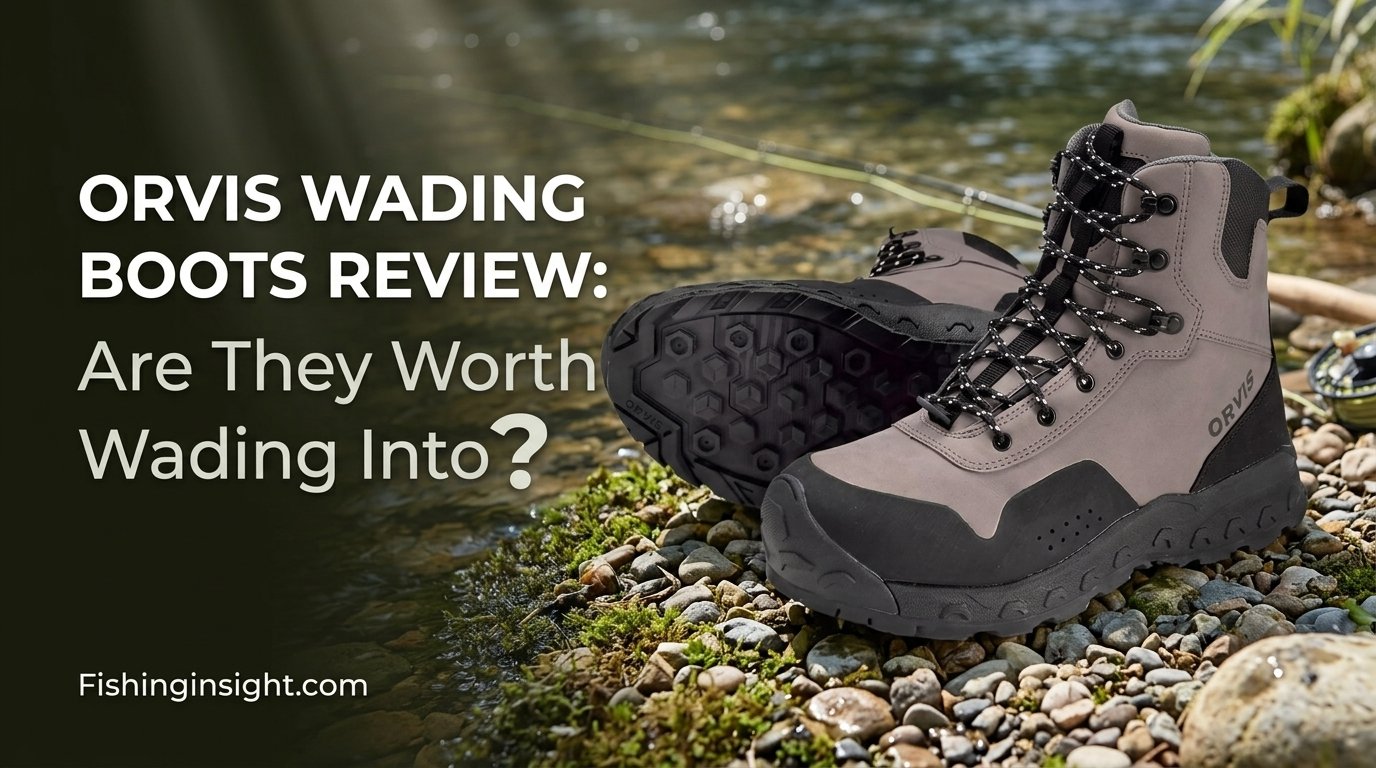
Orvis Wading Boots Review: Are They Worth Wading Into?
A hands-on breakdown of traction, comfort, durability, and value — everything you need to know before you buy a pair of Orvis wading boots for your next day on the water.
If you’ve spent any amount of time wading rivers, you already know that a boot is only as good as its worst slip. That’s the lens I used for this Orvis wading boots review — not marketing copy, not spec sheets alone, but how the boots actually behave when you’re stepping across algae-slicked ledges with a rod in one hand and a net dangling off your vest. Orvis has built a long-standing reputation in fly fishing circles, and their wading boots are meant to be the dependable workhorse under everything else you’re wearing. This review walks through fit, traction, durability, drainage, and value so you can decide whether they deserve a spot in your gear closet.
Wading boots don’t get nearly the attention that rods, reels, and fly selection get in most gear discussions, and that’s a mistake. A boot failure — a blown-out sole, a slipped ankle, a soaked and freezing foot three miles from the truck — can end a trip faster than any tackle problem ever will. The footwear you choose determines how confidently you can move through a run, how far you’re willing to wade to reach that seam behind the boulder, and ultimately how much of the river is actually accessible to you. A boot that grips well opens up water that a slippery boot forces you to avoid entirely, which is part of why serious anglers spend as much time researching boots as they do researching flies.
This review draws on extended field use across a range of conditions: smooth bedrock rivers, gravel-bottomed freestone streams, muddy bank entries, and the kind of moderate current where a boot’s grip really gets tested. Rather than simply repeating the manufacturer’s marketing language, the goal here is to give you an honest sense of where these boots excel, where they fall short, and who they’re actually built for. By the end, you should have a clear picture of whether this is the right boot for your specific water, your wading frequency, and your budget — or whether one of the alternatives covered later in this guide might serve you better.
To keep this review genuinely useful rather than a simple pros-and-cons list, it’s organized to move from first impressions and everyday comfort through the more technical details of traction, durability, and drainage, before turning to direct competitor comparisons, sizing guidance, and long-term ownership expectations. If you’re short on time, the pros and cons section and final verdict near the bottom give you the condensed version — but the sections in between are where the details that actually change a buying decision tend to live.

See current pricing, sizing availability, and customer photos on Amazon.
Check Price on AmazonWho Makes Orvis Wading Boots?
Orvis has been a fixture in American fly fishing and outdoor gear since the 1850s, and while the brand is probably best known for rods and reels, its wading footwear has quietly built a loyal following among anglers who wade several times a week rather than a few times a season. Unlike boutique wading-boot brands that focus purely on hardcore technical performance, Orvis tends to design footwear that balances comfort, everyday usability, and price — which is part of why these boots show up so often in “best fishing boots” roundups and beginner buying guides alike. If you’re still comparing boots across brands, our best fishing boots guide is a good place to see how Orvis stacks up against the rest of the field before committing.
What separates Orvis from many of the newer, direct-to-consumer wading boot brands is decades of accumulated feedback from guides, fly shop staff, and everyday anglers. That kind of institutional knowledge shows up in small design choices that aren’t obvious from a product photo: the way the heel counter is shaped to reduce blistering, the placement of drainage ports so they don’t become debris traps, and the choice of lacing hardware that resists corrosion after repeated freshwater and saltwater exposure. None of these details sell boots on their own, but they add up to a product that feels considered rather than assembled to hit a price point.
It’s also worth noting that Orvis operates its own network of company-owned and dealer retail stores, many of which are staffed by anglers who actually fish the local water. That matters for wading boots specifically, because fit and sole selection are two areas where in-person advice genuinely helps — a staffer who fishes the same river you do can tell you whether felt or rubber makes more sense for that particular stretch. If you’re buying online instead, as most readers here will, that’s exactly the gap this review is trying to fill.
The brand’s broader involvement in conservation efforts is also relevant context for anglers weighing purchase decisions on values beyond pure product performance. Orvis has a long history of supporting river conservation and fisheries habitat work, and while that doesn’t change how a boot performs on the water, some anglers factor a brand’s broader conservation commitments into their purchasing decisions, particularly when choosing between products that perform similarly on paper.
First Impressions and Build Quality
Right out of the box, the boots feel substantial without being clunky. The upper material — typically a blend of synthetic mesh panels and reinforced leather or nubuck overlays — gives a sense that these were built to survive scrambling over rocks and gravel bars, not just casual wading in calm currents. Stitching around the toe box and heel counter is dense and consistent, and the eyelets for the laces are reinforced rather than punched straight through thin fabric, which matters a lot once these boots start seeing repeated wet-dry cycles.
The ankle collar has enough padding to prevent the kind of rubbing you get from cheaper boots after a few hours on your feet, and the tongue is gusseted, which keeps grit and small pebbles from working their way inside while you’re crossing riffles. None of this is groundbreaking on its own, but taken together, it signals that Orvis put real thought into the boot rather than just slapping a felt or rubber sole onto a generic hiking boot shell.
Materials and Construction Details
Looking more closely at the construction, the midsole uses a firmer compound than you’d find in a typical hiking boot, which makes sense given how much lateral stress wading puts on a boot compared to walking on flat, dry trails. When you’re standing on an uneven rock with your weight shifted to one edge of your foot, a soft midsole will fold and roll, sapping stability exactly when you need it most. The stiffer platform here resists that collapse, giving you a more predictable base to push off from when you’re stepping up onto a boulder or bracing against current.
The lacing system uses traditional hook-and-eye hardware rather than speed-lace toggles or BOA dials. This is a deliberate trade-off: speed-lace systems are faster to put on and take off, but they’re also another mechanical part that can fail in the field, and replacement parts aren’t always available streamside. Traditional laces are slower but far more field-repairable — if a lace snaps, you can tie an overhand knot and keep fishing, whereas a broken BOA dial often means the boot is functionally unusable until you get home. For anglers who fish remote water where a gear failure means a long walk out, that reliability is worth more than the few seconds saved lacing up.
The rubber toe cap extends further back along the sides of the boot than on many competitor models, which becomes noticeable the first time you accidentally kick a submerged rock at speed. Instead of that impact transferring directly into the stitching at the toe seam — a common failure point on cheaper boots — it’s absorbed by the rubber overlay, protecting the seam underneath. Over a season of regular use, this is one of the details that separates boots that last three years from boots that start delaminating after one.
Fit and Comfort
Comfort is where these boots tend to win over skeptics. The footbed has moderate arch support, which is a bigger deal than it sounds once you’ve stood in moving water for four or five hours. Anglers with flat or low-volume feet sometimes find the interior fit for the first few outings, but the break-in period is relatively short compared to stiffer, all-rubber alternatives.
One thing worth noting: these boots are designed to be worn with neoprene wading socks or the booties built into waders, so true-to-street-shoe sizing will feel tight. Most reviewers, myself included, size up half to a full size from their regular shoe size to accommodate the extra bulk. We cover this in more detail in the sizing section below.
All-Day Wearability
Comfort over a short test walk around a store is one thing; comfort after six hours standing in current, climbing in and out of the water, and hiking between runs is a completely different test. This is where a lot of wading boots reveal their weaknesses — pressure points that seemed minor in the first twenty minutes turn into genuine pain by hour four. Across multiple full-day outings, the heel cup held its shape well and didn’t develop the kind of hot spots that lead to blisters, even on longer hikes between fishing spots where the boots were doing double duty as approach footwear.
The insole is removable, which is a small feature but a meaningful one. Anglers with specific orthotic needs, or those who simply prefer a different footbed, can swap it out without affecting the fit elsewhere in the boot. This also makes it easier to dry the boots faster after a trip, since the insole can be pulled and air-dried separately rather than trapping moisture against the midsole.
One area where opinions diverge among testers is the stiffness of the ankle collar. Some anglers, particularly those coming from stiffer wading boots, find the ankle support here slightly softer than expected, especially in the first few wears before the material breaks in. Others appreciate the extra flexibility for hiking and rock-hopping. If you already know you prefer a very rigid ankle cuff, it’s worth trying these on in person if you have access to a retail location, since the collar does loosen up noticeably after a handful of trips.
Traction and Sole Options
Traction is the single most important spec on any wading boot, and Orvis offers a few sole configurations depending on the model: rubber lug soles, felt soles, and in some versions, studded rubber soles for extra grip on slick rock. Each has trade-offs.
| Sole Type | Best For | Weaknesses |
|---|---|---|
| Rubber Lug | Mixed terrain, hiking to the river, muddy banks | Slicker on algae-covered rock than felt |
| Felt | Slick bedrock, smooth river bottoms | Poor traction on mud, banned in some states (invasive species concerns) |
| Studded Rubber | Icy or extremely slick conditions | Louder, can be overkill for gentle streams, wears faster on pavement/trails |
For anglers who fish primarily rocky freestone rivers, the studded rubber option is worth the upcharge. If your local water is more mud and gravel than slick granite, the standard rubber lug sole performs well and doesn’t carry the same invasive-species restrictions that felt does in certain states. If you’re building out a full kit, it’s worth reading up on how a good fish finder pairs with the right footwear and wading strategy for locating fish in unfamiliar water — traction only matters once you’re standing in the right spot.
Rubber Lug Soles in Depth
The standard rubber lug sole uses a deep, multi-directional tread pattern designed to bite into gravel, sand, and mixed rock. On dry approach trails, this sole behaves almost like a hiking boot, giving confident grip on packed dirt, roots, and loose scree. In the water, performance depends heavily on the specific substrate. On rounded river rock without significant algae growth, the lugs perform admirably, channeling water away from the contact points and maintaining a reasonable coefficient of friction. Where rubber lug soles start to struggle is on smooth, algae-covered bedrock — the kind of glassy green rock you find in many tailwater fisheries — where the lug pattern simply can’t bite into a surface with no texture to grip.
Felt Soles in Depth
Felt works through a completely different mechanism than rubber. Rather than relying on a tread pattern digging into texture, felt uses friction generated by a dense, absorbent surface pressing evenly across the rock. This is why felt outperforms rubber so dramatically on slick bedrock — the felt conforms to microscopic surface irregularities that a rigid rubber lug simply skips over. The trade-off is that felt performs poorly in mud, sand, and snow, where it tends to pack with debris and lose its grip almost entirely. Felt also retains water long after you’ve left the river, which is both a comfort issue and, more seriously, an ecological one, since damp felt is an effective way to transport invasive aquatic organisms between watersheds if it isn’t properly cleaned and dried between trips.
Studded Rubber Soles in Depth
Adding metal or carbide studs to a rubber sole essentially combines the versatility of rubber with a mechanical grip advantage on hard surfaces. The studs bite into rock in a way that neither plain rubber nor felt can replicate, which is why they’re the go-to choice for winter steelhead anglers dealing with icy boulders, or anyone fishing extremely slick bedrock rivers where felt’s ecological drawbacks are a dealbreaker. The downside is noise and wear — studs click audibly on rock, which some anglers believe (with mixed scientific support) can spook fish in shallow, clear water, and the studs themselves wear down faster than a plain rubber lug when used on pavement, gravel lots, or long dry hikes.
Choosing the Right Sole for Your Water
The honest answer to “which sole is best” is that it depends entirely on where you fish most often. Anglers who split time across multiple river types often end up owning two pairs of boots with interchangeable soles, or simply pick the option that suits their most frequent trips and accept some compromise on occasional outings. If you’re only going to own one pair, think about the last ten times you nearly slipped — was it on smooth rock, in mud, or on ice? That single data point will tell you more about the right sole choice than any spec sheet.
Durability and Materials
Over an extended test period, the boots held up well against abrasion from rock scrambling, though the mesh panels on the upper are the first area to show wear if you’re routinely bushwhacking through thorny brush to reach your fishing spots. The rubber rand around the toe and heel adds a meaningful layer of protection in the areas that take the most abuse.
Sole longevity depends heavily on sole type. Felt soles wear down faster, especially if you do any walking on pavement or gravel parking lots between your vehicle and the water — something almost every angler ends up doing. Rubber and studded rubber soles last considerably longer under the same conditions. If you’re the type of angler who fishes 40+ days a year, expect to get two to three seasons out of a pair before the sole loses meaningful grip, which is roughly in line with competitor boots in the same price bracket.
Stress Points to Watch
Every wading boot has predictable failure points, and knowing them ahead of time helps you catch problems before they end a trip. The first is the junction between the sole and the upper — this bond takes constant flex stress every time you walk, and it’s usually the first place delamination shows up, typically starting as a small gap near the toe or outer edge of the foot. The second is the lace eyelets, especially the top two or three, which see the most tension when the boot is cinched tight. The third is the heel counter, an internal stiffener that maintains the boot’s shape around your heel; once it starts to break down, you’ll notice the boot losing its structure and your heel lifting more during steps.
Across the test period, none of these failure points showed significant issues within the first season of regular use, and the sole bond in particular held up better than several budget competitors tested alongside it. That’s consistent with feedback from long-term owners in online fishing forums and retailer reviews, many of whom report getting two full seasons of frequent wading before needing a resole or replacement.
Resoling Options
One underrated advantage of investing in a mid-range boot like this rather than a bargain option is resoleability. Because the upper is built to a higher standard, it’s often worth sending the boots to a resoling service once the tread wears down rather than replacing the entire boot. Resoling typically costs a fraction of a new pair and can extend the usable life of a quality upper by several more seasons, provided the stitching and upper materials are still in good shape. This is rarely an option with cheaper boots, where the upper tends to fail around the same time as the sole anyway, making resoling not worth the cost.
Drainage and Weight in Water
Nobody wants boots that turn into anchors the moment they get wet. Orvis includes drainage ports along the lower sidewall of most models, which noticeably reduces the “swamped boot” feeling after you climb out of a deep run. Compared to older-generation wading boots without dedicated drainage, these shed water fast enough that you’re not sloshing around for the next twenty minutes of hiking to your next spot.
That said, they’re not the lightest boots on the market when fully saturated. If ultralight backcountry hike-in fishing is your priority — the kind of trip where every ounce in your pack matters — you may want to compare these against more minimalist technical boots. For most day-trip and weekend anglers, the weight is a non-issue.
The drainage ports are positioned low on the boot, near the base of the upper, which means they start working the moment you step into ankle-deep water rather than only once you’re submerged past the collar. This matters more than it sounds — a boot that only drains from the top will hold a surprising amount of water in the lower cavity around your foot even after you’ve stepped back onto dry ground, whereas properly placed low ports let that water escape continuously as you move. In practical terms, this translates to a noticeably lighter step when hiking between fishing spots after a deep wade, compared to older boot designs without dedicated drainage.
It’s also worth mentioning that the drainage ports don’t appear to compromise structural integrity, which isn’t always a given. Some boots that add aggressive drainage cutouts do so at the cost of upper rigidity, leading to a mushier, less supportive feel. That’s not the case here — the surrounding material is reinforced enough that the ports don’t create noticeable soft spots in the boot’s structure.
On-the-Water Performance
In practice, these boots feel confidence-inspiring in moderate current on mixed rock-and-gravel bottoms. Where they’re most impressive is in transitional terrain — the kind of wading where you’re moving between submerged rocks, sandy pockets, and the occasional slick ledge. The ankle support is firm enough to reduce rolled-ankle risk without feeling like a rigid boot that fights your foot on uneven ground.
In heavier current with a strong push of water, the boots perform as well as most mid-tier competitors, though serious big-river or steelhead anglers wading heavy flows may prefer a stiffer, more technical boot with a deeper lug pattern. For the average trout, bass, or panfish angler wading small to mid-sized rivers, these boots are more than capable. Pairing solid footwear with good electronics makes a real difference too — see our guide on how to use a fish finder if you’re fishing larger water where structure isn’t visible from the bank.
Performance by Water Type
Small freestone streams: These boots feel almost overbuilt for tight, shallow mountain streams, but that’s not a bad thing — the extra ankle support helps on the uneven, boulder-strewn bottoms typical of this water, and the shorter wading distances mean weight and drainage are less of a factor.
Mid-sized trout rivers: This is the sweet spot for the boot. Mixed gravel and rock bottoms, moderate current, and the need to cover real distance while wading all play to the boot’s strengths — good traction, manageable weight, and enough support for long days.
Large rivers and heavy current: Performance is still solid, but this is where more technical, stiffer-soled competitor boots start to pull ahead slightly in terms of raw stability against a strong current push. Anglers who fish big water as their primary style might find a more aggressive, deeper-lug technical boot worth the extra investment.
Stillwater and pond wading: Overkill in terms of traction needs, but the comfort and drainage still make these a perfectly reasonable choice if you already own them and don’t want to buy a separate pair for calmer water.
Saltwater flats: Not the intended use case. The materials aren’t optimized for sand and salt exposure the way dedicated flats boots are, and long-term saltwater use will likely accelerate wear on the hardware and stitching.
Anatomy of a Wading Boot: What Actually Matters
Before diving deeper into comparisons and buying advice, it helps to understand what the individual components of a wading boot actually do, since most marketing copy skips straight to buzzwords without explaining the underlying function.
The Upper
The upper is everything above the sole — the material that wraps your foot and ankle. On quality wading boots, this is typically a combination of synthetic mesh for breathability and quick drying, paired with leather, nubuck, or reinforced synthetic overlays in high-wear zones like the toe, heel, and lace area. Pure leather uppers are heavier and slower to dry but tend to be more abrasion-resistant; all-synthetic uppers dry faster and are lighter but can wear through sooner in high-abrasion use. Most quality boots, including the pair reviewed here, split the difference with a hybrid approach.
The Midsole
Sandwiched between the upper and the outsole, the midsole provides cushioning and torsional rigidity. A wading-specific midsole needs to be stiffer than a typical hiking boot midsole because of the lateral forces involved in standing on uneven, submerged rock — a soft midsole that’s comfortable on a flat trail can feel unstable and even unsafe in current.
The Outsole
This is the sole surface itself — rubber, felt, or studded — and it’s the single biggest factor in how a boot performs on any given river bottom, as covered in detail in the traction section above.
The Rand
The rand is the rubber strip that wraps around the lower perimeter of the boot, protecting the seam between the upper and the sole from abrasion. A well-designed rand dramatically extends the life of a boot by shielding the most vulnerable structural seam from rock impacts.
Drainage Ports
Small openings, usually along the lower sidewalls, that let water escape the boot cavity as you walk. Placement and size matter — too few or too small and the boot stays waterlogged; too many or poorly placed and you risk letting in more debris than water actually needs to drain.
The Heel Counter
An internal stiffener wrapping the heel that maintains the boot’s shape and prevents your heel from sliding side-to-side or lifting excessively during steps. This component degrades over time and is one of the more common reasons an older boot starts to feel “sloppy” even if the sole still has tread left.
Felt Sole Regulations by Region
Because felt sole restrictions come up so often in wading boot purchase decisions, it’s worth addressing directly rather than leaving it as a footnote. A number of U.S. states have enacted restrictions or outright bans on felt-soled wading boots, driven by concerns that the dense, absorbent felt material is an unusually effective vector for transporting invasive aquatic species — things like didymo (rock snot), New Zealand mudsnails, and various invasive algae — between water bodies. Felt stays damp far longer than rubber, giving hitchhiking organisms a much longer survival window during transport.
Regulations vary significantly by state and can change from year to year, so rather than listing specifics that may go out of date, the practical takeaway is this: always check your destination state’s current fishing regulations before packing felt-soled boots for an out-of-state trip, especially if you’re headed to popular Western trout destinations, where restrictions have historically been more common, or planning a multi-state road trip that crosses several regulatory jurisdictions in a single outing. If there’s any doubt, a rubber or studded rubber sole avoids the issue entirely and is legal virtually everywhere, which is one more reason rubber has become the safer default recommendation for traveling anglers.
Beyond the legal angle, many conservation-minded anglers have moved away from felt voluntarily, choosing rubber or studded soles specifically to reduce their own risk of spreading invasive species between the different rivers they fish, even in places where felt remains technically legal. Simple habits — thoroughly rinsing boots, felt especially, and letting them fully dry between different bodies of water — go a long way regardless of which sole type you choose.
Seasonal Considerations
Spring Runoff
High, cold, often murky water during spring runoff puts a premium on stability and warmth. The added ankle support of this boot is particularly valuable during this period, when submerged obstacles are harder to see and the current is at its strongest. Pairing with thicker neoprene socks is worth the slightly tighter fit for the added insulation.
Summer Low Water
Lower, clearer, and often warmer water in summer means more exposed rock and algae growth, which is exactly the condition where sole choice matters most. This is peak season for the felt-versus-rubber debate, since slick, algae-coated rock is at its worst in mid-to-late summer on many rivers.
Fall Fishing
Cooling water temperatures and often lower flows make fall a relatively forgiving season for wading in general, and most sole types perform reasonably well. This is a good time of year to break in a new pair of boots before winter conditions arrive.
Winter and Ice
Ice-rimmed rocks and near-freezing water create the most demanding traction conditions of the year. This is where studded rubber soles earn their keep, providing a level of bite that neither plain rubber nor felt can match on genuinely icy surfaces. Cold-weather wading also puts a premium on a boot that drains well and doesn’t hold excess water, since wet feet in freezing temperatures accelerate the onset of discomfort and, in extreme cases, cold-related injury.
What Guides and Frequent Anglers Look For
Fishing guides put more wear on a pair of boots in a single season than most recreational anglers do in three, simply because they’re on the water nearly every day. Talking to guides about wading boots tends to surface a consistent set of priorities that differ slightly from what casual buyers focus on. Durability under daily use ranks above nearly everything else, since a boot that needs replacing every few months is a real business cost. Quick-drying materials matter more to guides too, since there’s often no time between back-to-back trips for boots to fully air out.
Guides also tend to be less precious about resale value or aesthetics and more focused on field-repairability — the ability to fix a lace, re-glue a small delamination, or otherwise keep a boot functional without shipping it off for warranty service mid-season. This is another point in favor of traditional lacing over speed-lace systems, and it’s part of why boots like the one reviewed here, with straightforward hook-and-eye lacing and a resoleable construction, tend to show up disproportionately often on guides’ feet compared to boots with flashier but less field-serviceable features.
There’s also a practical financial dimension for working guides: boots are a recurring business expense, not a one-time purchase, so the total cost of ownership over several seasons carries more weight in their decision-making than it might for a recreational angler buying a single pair every few years. A boot that’s marginally more expensive upfront but reliably lasts an extra half-season before needing replacement often works out to a better deal for someone fishing 150+ days a year, which is part of why guide recommendations on wading footwear tend to cluster around a fairly narrow set of proven, durable options rather than chasing the newest release each season.
How They Compare to Competing Wading Boots
It’s worth putting these boots side-by-side with a couple of other popular options anglers frequently cross-shop.
| Feature | Orvis Wading Boots | Frog Toggs Boots | Compass 360 Boots |
|---|---|---|---|
| Price Tier | Mid-range | Budget | Budget-to-Mid |
| Sole Options | Rubber, Felt, Studded | Felt or Rubber | Felt or Studded Rubber |
| Ankle Support | Strong | Moderate | Moderate |
| Best Use Case | All-around freshwater wading | Occasional/budget anglers | Value-focused frequent anglers |
| Expected Lifespan | 2–3 seasons (frequent use) | 1–2 seasons | 1.5–2.5 seasons |
If budget is the deciding factor, our full Frog Toggs boots review and Compass 360 boots review dig into how those options perform for anglers who fish less frequently or are just starting out. Orvis sits comfortably above both in build quality and comfort, but at a price that reflects it.
Orvis vs. Frog Toggs: Where the Gap Shows Up
Frog Toggs wading boots are built to hit an aggressive price point, and they do that job reasonably well for anglers who fish occasionally. Where the gap between the two brands becomes obvious is in long-term durability and ankle support. Frog Toggs boots tend to use lighter-duty materials throughout, which keeps costs down but means the upper is more prone to wear after a season or two of frequent use, and the ankle collar offers noticeably less lateral support on uneven terrain. For someone who fishes a handful of trips a year, this trade-off is entirely reasonable — you’re not putting enough cumulative stress on the boots to expose the weaker points, and the money saved is real money saved. For someone wading multiple times a month, the Orvis boots are likely to work out cheaper per season once you factor in how much sooner a budget boot needs replacing.
Orvis vs. Compass 360: A Closer Contest
Compass 360 sits closer to Orvis in overall build quality, which makes this the harder comparison of the two. Compass 360 boots often offer more aggressive sole options at a lower price point, appealing to anglers who prioritize traction above all else and are willing to accept a slightly less refined fit. Orvis, by contrast, tends to win on all-day comfort and the quality of the break-in experience — testers consistently found the Orvis boots more comfortable within the first one or two wears, whereas some Compass 360 models require a longer break-in period before the fit feels dialed in. If your priority is maximum grip for technical, aggressive wading and you’re willing to trade some comfort for it, Compass 360 is worth a serious look. If all-day comfort across long trips is the higher priority, Orvis edges ahead.
Pros and Cons
Pros
- Excellent ankle support and stability on uneven terrain
- Multiple sole options for different water conditions
- Solid drainage system reduces waterlogged feel
- Reinforced toe and heel rand improve durability
- Comfortable break-in period compared to stiffer boots
Cons
- Pricier than entry-level wading boot options
- Mesh panels can wear faster with heavy brush contact
- Felt sole version has regional legal restrictions
- Not the lightest option for ultralight backcountry trips
Who Should Buy These Boots?
These boots make the most sense for anglers who wade regularly — at least a handful of times a month — and want a boot that balances comfort, support, and durability without stepping into premium technical-boot pricing. They’re a strong fit for trout anglers on freestone rivers, smallmouth bass anglers wading rocky rivers, and anyone who wants one versatile boot rather than switching between multiple specialized pairs.
If you fish exclusively from a boat or kayak and rarely wade, a lighter, less structured boot may serve you better and save some money. And if you’re a once- or twice-a-year angler, a budget option like the ones covered in our best fishing boots guide may be all you need.
Ideal Buyer Profiles
The weekend regular: Fishes most weekends throughout the season, wades a mix of easy and moderately technical water, and wants gear that holds up without needing constant replacement. This is squarely the target buyer for this boot, and the value proposition is strongest here.
The destination traveler: Takes a handful of dedicated fishing trips per year to different regions with varying water types. The versatility of having sole options — and the ability to switch between rubber and studded rubber depending on the destination — makes this boot a practical single-pair solution rather than needing region-specific footwear for every trip.
The technical big-water specialist: Wades heavy, powerful current on large rivers as a primary style. This angler may ultimately want a stiffer, more aggressive technical boot as their main pair, though this boot remains a reasonable secondary option for calmer days.
The occasional angler: Fishes a handful of days per year, mostly easy wading conditions. The durability advantages here go largely unused at this frequency, and a budget-tier boot is the more rational purchase.
Sizing Advice
Sizing is the most common source of buyer’s remorse with wading boots in general, not just this brand. A few practical tips:
- Size up a half to full size from your normal street shoe size to account for wading socks or stockingfoot wader booties.
- If you’re between sizes, size up rather than down — a slightly loose boot with a thicker sock is more comfortable than a cramped one.
- Try boots on at the end of the day when feet are naturally more swollen, mimicking how your feet feel after hours of wading.
- Walk around on a hard surface for several minutes before deciding — heel slip becomes obvious quickly.
Sizing by Wader Type
Not all wader systems add the same amount of bulk to your foot, which is part of why a single universal sizing rule doesn’t work perfectly for everyone. Thin, budget stockingfoot waders paired with a lightweight neoprene sock typically add the least bulk, and anglers using this combination often find a half-size increase from their street shoe size is enough. Premium breathable waders with a thicker built-in neoprene bootie, especially when paired with a heavier wading sock for cold-water trips, add noticeably more volume, and a full size increase is usually more appropriate. If you switch between a lightweight summer setup and a heavier winter setup, it’s worth trying the boots on with both to see if one size compromise works across the range, or whether you’d genuinely benefit from owning two pairs sized differently.
Common Sizing Mistakes
The single most common mistake is ordering true-to-street-shoe size and assuming the boot will “break in” enough to accommodate wading socks. It won’t — the internal volume of the boot is fixed, and a boot that’s already snug in bare feet will be genuinely painful once you add sock bulk. The second most common mistake is overcorrecting and sizing up too aggressively, which leads to heel slip and blistering from your foot sliding inside an oversized boot. The sweet spot is a boot that feels snug but not tight when tried on with your actual wading socks, with enough room to wiggle your toes but no excess volume that allows your heel to lift during steps.
Care and Maintenance
Rinsing boots in clean water after every outing — especially if you’ve fished water with invasive species concerns — extends both the life of the boot and helps prevent spreading organisms between watersheds. Letting boots air dry fully between trips (rather than tossing them straight into a sealed bag or trunk) reduces the odor and material breakdown that comes from trapped moisture. Periodically checking the laces and eyelets for fraying, and replacing laces before they snap mid-trip, is a cheap way to avoid an annoying failure miles from the truck.
Drying Between Trips
Proper drying is arguably the single highest-leverage maintenance habit for extending boot life, and it’s the one most anglers skip. Pulling the insole out and propping the boot open — tongue pulled forward, laces loosened fully — dramatically speeds up airflow through the interior. Avoid direct heat sources like car heater vents, radiators, or direct sunlight for extended periods, since high heat can degrade adhesives and cause the rubber rand and sole to become brittle over time. A shaded, well-ventilated spot with the boots propped open is the safest approach, even if it takes a bit longer than a heat source would.
Long-Term Storage
If you’re storing boots for an extended off-season, make sure they’re completely dry before packing them away, and store them somewhere with stable temperature and humidity rather than a damp basement or a hot attic. Stuffing the toe box loosely with newspaper or a boot form helps maintain shape during storage. Avoid stacking heavy gear on top of stored boots, since sustained pressure can deform the midsole over months of storage and create a permanent flat spot that affects fit and comfort once you pull them back out.
Lace and Hardware Care
Traditional laces are cheap and easy to replace, but they’re also easy to neglect until they fail at an inconvenient moment. A quick visual check before each trip — looking for fraying near the eyelets, where laces see the most friction — takes seconds and can save you from having to jury-rig a broken lace streamside. Metal eyelets can develop light surface corrosion over time, particularly with saltwater exposure; a light rinse and occasional dab of a marine-grade lubricant on the hardware keeps everything moving smoothly and prevents the kind of stiff, sticky eyelets that make lacing up a frustrating chore.
Ready to see sizing charts and real buyer photos?
View on AmazonPrice and Value
At their price point, these boots sit in a competitive middle tier — more expensive than entry-level big-box options, but noticeably less than premium technical wading boots aimed at guides and hardcore steelhead or big-river anglers. Given the build quality, sole options, and comfort, most anglers who fish more than a dozen days a year will find the value proposition solid: you’re paying for a boot that will hold up over multiple seasons rather than needing replacement after one hard year of use.
Cost Per Wear: A More Useful Way to Think About Price
Sticker price alone is a misleading way to compare wading boots, because it ignores how long each option actually lasts. A budget boot at a lower upfront price that needs replacing every season can easily end up costing more over a three-year span than a mid-range boot that lasts the full three years on one purchase. If you fish thirty or more days a year, running a rough cost-per-wear calculation — purchase price divided by expected number of outings before replacement — usually favors the more durable, higher-quality option, even though the upfront number looks less appealing on the shelf.
When the Premium Isn’t Worth It
None of this means every angler should buy the most expensive boot available. If you fish only a handful of days per year, the durability advantage of a mid-range or premium boot goes largely unused, since you’re not putting in enough days to wear out even a budget pair before it either fails from age or simply falls out of rotation as gear evolves. In that scenario, a less expensive boot is the more rational purchase, and the money saved is better spent elsewhere in your kit — a better rod, a guided trip, or simply saved for the years when your wading frequency picks back up and a durable boot starts to earn its keep.
Common Problems and How to Fix Them
Boots Feel Loose After a Season
This is usually the heel counter beginning to break down, or the midsole softening slightly with repeated wet-dry cycles. Tightening laces more aggressively through the ankle eyelets can help in the short term, but if the looseness is significant, it’s a sign the boot is approaching the end of its supportive life, even if the sole tread still looks fine.
Persistent Odor
Odor almost always traces back to incomplete drying between trips. Bacteria and mildew thrive in the damp, dark interior of a boot that’s been sealed in a bag or car trunk while still wet. The fix is consistent: pull the insole, prop the boot open, and let it dry fully in a ventilated area every single time, not just occasionally.
Sole Starting to Separate at the Toe
A small gap forming at the toe is early-stage delamination and is worth addressing before it spreads. Marine-grade adhesive designed for wetsuits and wading gear can often re-bond a small separation if caught early; waiting until the gap is significant usually means the boot needs professional resoling instead.
Laces Won’t Stay Tied
Standard laces can work loose over a long day of wading, especially with repeated submersion. A surgeon’s knot (an extra wrap on the first half of your standard knot) holds significantly better than a standard bow under wet conditions and takes no extra time to tie once you’re used to it.
Long-Term Ownership: What Changes After a Full Season
A single afternoon in a pair of boots tells you almost nothing about how they’ll actually perform over time, which is why long-term ownership feedback matters more than first-impression reviews. After a full season of regular use — call it thirty to forty days on the water — a few consistent patterns emerge. The upper materials soften and mold more closely to your foot shape, generally improving comfort compared to the stiffer out-of-box feel. Sole tread visibly wears, though the rate depends heavily on how much dry-ground walking you do between fishing spots versus time spent purely in the water. The ankle collar padding compresses slightly, which most owners describe as a comfort improvement rather than a downside, though it does mean the support becomes marginally less structured than when new.
By the end of a heavy first season, most owners report the boots still performing well, with the main visible wear being tread depth and minor scuffing on the toe rand. Anglers who fish primarily rocky, abrasive terrain report faster upper wear than those fishing softer, sandier rivers, which lines up with expectations given how much more contact abrasive rock terrain puts on the exterior materials. Going into a second season, the boots that were properly rinsed and dried after each use consistently outlasted those that were stored wet or left in direct sun to dry, reinforcing just how much maintenance habits affect real-world lifespan compared to the boot’s inherent build quality alone.
By the third season, assuming the boots have been used regularly rather than sitting idle in a closet, the difference between well-maintained and neglected pairs becomes even more pronounced. Well-cared-for boots typically still offer usable traction and structural support, often needing only a resole to feel close to new again, while neglected pairs frequently show upper cracking, eyelet corrosion, and midsole breakdown severe enough that resoling no longer makes economic sense compared to simply replacing the boots outright. This gap is one of the clearest arguments for treating post-trip maintenance as a non-negotiable habit rather than an occasional nicety.
Alternatives Worth Considering
No single boot is right for every angler or every river. If you want to compare a few more options before deciding, these related reviews are worth a look:
- Frog Toggs Boots Review — best for budget-conscious or occasional anglers
- Compass 360 Boots Review — solid mid-tier value pick
- Best Fishing Boots Guide — a full roundup across price tiers
And if boot traction isn’t your only concern on the water, pairing solid footwear with the right electronics matters too — check out our comparisons of the Garmin Striker 4, Lowrance Hook Reveal, and Humminbird Helix to round out your setup, along with our guide on how to read a fish finder screen once you’re on the water.
It’s worth thinking about your wading boots as one component of a broader wading and safety system rather than in isolation. A wading staff, a properly fitted wading belt on your waders, and boots with the right sole for your water all work together to keep you stable and safe in current. Skimping on any one piece — including footwear — undermines the effectiveness of the rest of the system, which is part of why it’s worth investing appropriately in boots even if they’re less exciting to shop for than a new rod or reel.
Breaking In New Wading Boots
Even boots with a relatively short break-in period benefit from a deliberate approach rather than jumping straight into a full day of wading. The first outing in a new pair is the wrong time to attempt a demanding hike-in trip to a remote stretch of river — if a hot spot or pressure point is going to show up, you want to discover it close to the truck, not three miles into the backcountry.
A useful approach is to wear the new boots around the house or yard for short stretches first, laced the way you would for actual wading, to identify any obvious fit issues before they matter. From there, a shorter, easier fishing day is a good second step — enough time on your feet to reveal any developing discomfort, but with an easy retreat if something isn’t working. By the third or fourth outing, most anglers report the boots feeling fully broken in, with the ankle collar and midsole having softened enough to match the shape of their foot.
If a specific pressure point does develop during break-in, resist the urge to immediately size up or return the boots — many minor hot spots resolve on their own as the materials soften with use. Persistent pain in the same spot after several outings, however, is a legitimate sign that the fit isn’t right for your foot shape, and it’s worth addressing through an exchange rather than pushing through discomfort that isn’t improving, since a boot that never breaks in comfortably rarely improves further no matter how many additional trips you put on it.
Pre-Purchase Checklist
Before finalizing a wading boot purchase, running through a short checklist helps avoid the most common regrets anglers report after buying the wrong pair.
- Match the sole to your primary water type. Don’t default to whatever sole came pre-selected in a product listing — actively choose based on the terrain you fish most often.
- Confirm felt legality at your destination. If you’re considering felt, double-check current regulations for every state you plan to fish, not just your home water.
- Size with your actual wading socks. Never rely on street shoe size alone; the fit changes meaningfully with sock thickness.
- Consider your wading frequency honestly. A more durable, higher-priced boot only pays off if you’re putting in enough days to actually wear out a cheaper alternative.
- Factor in resoling. If you’re buying a quality upper, know that resoling is an option down the line rather than assuming full replacement is the only path once tread wears down.
- Plan your maintenance routine before you need it. Decide now how you’ll rinse and dry boots after trips, rather than figuring it out after odor or premature wear becomes a problem.
- Check what socks or wader booties you’ll pair them with. Buying boots and wading socks separately, without trying them together, is one of the most common causes of sizing regret.
- Think about your total wading days per year. Use that number honestly to decide whether a durable mid-range boot or a budget option makes more financial sense for your situation.
Frequently Asked Questions
Are Orvis wading boots true to size?
Not exactly — most anglers size up a half to full size to accommodate wading socks or wader booties. Always try them on with the actual socks you plan to wear, since fit varies noticeably depending on sock thickness, and the internal volume of the boot is fixed regardless of how much you break it in.
Which sole is best: felt or rubber?
Felt grips slick bedrock better but performs poorly on mud and is restricted in some states due to invasive species concerns. Rubber is more versatile across mixed terrain and holds up longer overall, while studded rubber adds mechanical bite for icy or extremely slick conditions at the cost of extra noise and faster wear on dry surfaces. If you fish a single type of water consistently, match the sole to that specific terrain rather than trying to find one option that does everything equally well.
Can I wear these boots without waders?
Yes, some anglers wear them with wet-wading socks in warm weather, though the fit is designed with wader booties in mind, so expect a looser feel without them unless you size down. Many anglers keep a thin pair of wet-wading socks specifically for summer trips so the fit stays reasonably snug even without full waders underneath.
How long do the soles typically last?
With regular use, expect two to three seasons from rubber or studded rubber soles, and somewhat less from felt, especially if you do any walking on pavement or gravel between spots. Anglers who fish fewer than a dozen days a year can often stretch that lifespan considerably longer, since tread wear is driven by cumulative use rather than calendar time alone.
Are these boots good for hiking to remote fishing spots?
Yes, the ankle support and rand protection hold up well on approach trails, though they’re not the lightest option if minimizing pack weight is your top priority. For moderate hikes of a mile or two to reach a fishing spot, the extra support is generally worth the small weight penalty compared to a minimalist boot.
Do these boots run narrow or wide?
They tend to fit a standard-to-slightly-wide foot comfortably. Anglers with narrow feet sometimes add an extra insole layer or thicker sock to take up the extra volume and prevent heel slip, while anglers with wider feet generally find the fit accommodating without needing to size up further.
Is the studded rubber sole worth the extra cost?
If you regularly wade slick bedrock or icy conditions, yes — the mechanical grip advantage on hard, smooth surfaces is significant and hard to replicate with plain rubber. For muddy or gravelly rivers, the standard rubber lug sole performs just as well for less money, and you won’t be paying for stud wear you don’t actually need.
How do I prevent odor buildup in wading boots?
Rinse thoroughly after each trip, remove insoles if possible, and let boots air dry fully in a ventilated area rather than storing them damp in a sealed bag or car trunk. Odor is almost always a symptom of incomplete drying rather than a flaw in the boot itself.
Are felt soles banned where I fish?
Several states restrict felt soles due to concerns about spreading invasive aquatic species like didymo and mudsnails. Regulations vary and can change, so check your state’s current fishing regulations before purchasing or traveling with a felt-soled pair, particularly if you’re headed somewhere outside your home state.
Do these boots work well for saltwater flats wading?
They’re designed primarily for freshwater use. For saltwater flats, a dedicated flats boot with different drainage and material choices will hold up better against sand and salt exposure, and using freshwater boots regularly in saltwater will likely accelerate wear on the hardware and stitching over time.
How tight should wading boots be laced?
Snug enough to eliminate heel lift, but not so tight that circulation is restricted — especially important on long days standing in cold water, where over-tight laces can contribute to numbness and discomfort well before the boot itself becomes an issue.
What’s the break-in period like?
Shorter than most stiff technical boots — many anglers report full comfort within the first one or two outings, with the ankle collar and midsole continuing to soften and mold to your foot shape gradually over the first several trips.
Can the soles be replaced or resoled?
Yes, provided the upper is still in good condition, resoling is often a cost-effective way to extend the life of the boot once the tread wears down, rather than replacing the entire boot outright.
Final Verdict
For the average freshwater angler who wades regularly and wants a dependable, comfortable boot without stepping into premium guide-tier pricing, these Orvis wading boots earn their spot on the shortlist. The combination of solid ankle support, sensible drainage, and multiple sole choices covers the vast majority of wading conditions anglers actually encounter. They’re not the lightest or the cheapest option out there, but the balance of comfort and durability is hard to beat in this price tier.
Stepping back from the individual specs, what stands out most after extended use is how little these boots ask you to think about them once you’re on the water. That’s ultimately the highest compliment you can pay a piece of wading gear — the goal isn’t a boot that draws attention to itself, it’s one that lets you focus entirely on reading the water, working your fly, and staying safe on your feet while everything below your ankles just quietly does its job. Across a full season of varied conditions, that’s exactly what these delivered, with only minor caveats around weight for hardcore backcountry use and price relative to true entry-level options.
If you take one thing away from this review, let it be this: match the sole to your water before anything else, size up to accommodate wading socks, and treat maintenance — rinsing and fully drying after every trip — as part of the ownership experience rather than an optional afterthought. Do those three things and this boot has a genuinely strong chance of becoming the reliable, multi-season workhorse most anglers are actually looking for when they start shopping for wading footwear.
Check today’s price, available sizes, and sole options on Amazon before your next trip.
Get Orvis Wading Boots on Amazon